

The Canadian tank hunter.
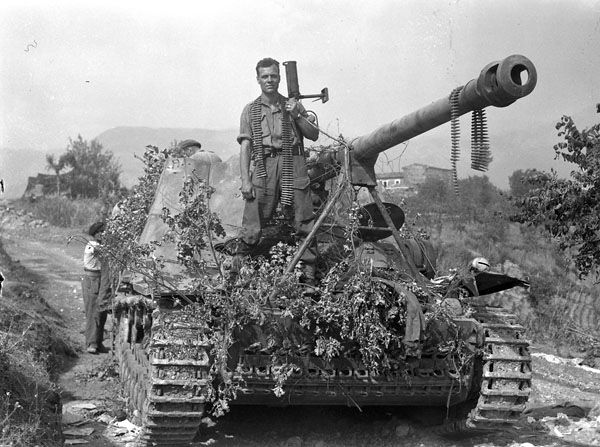
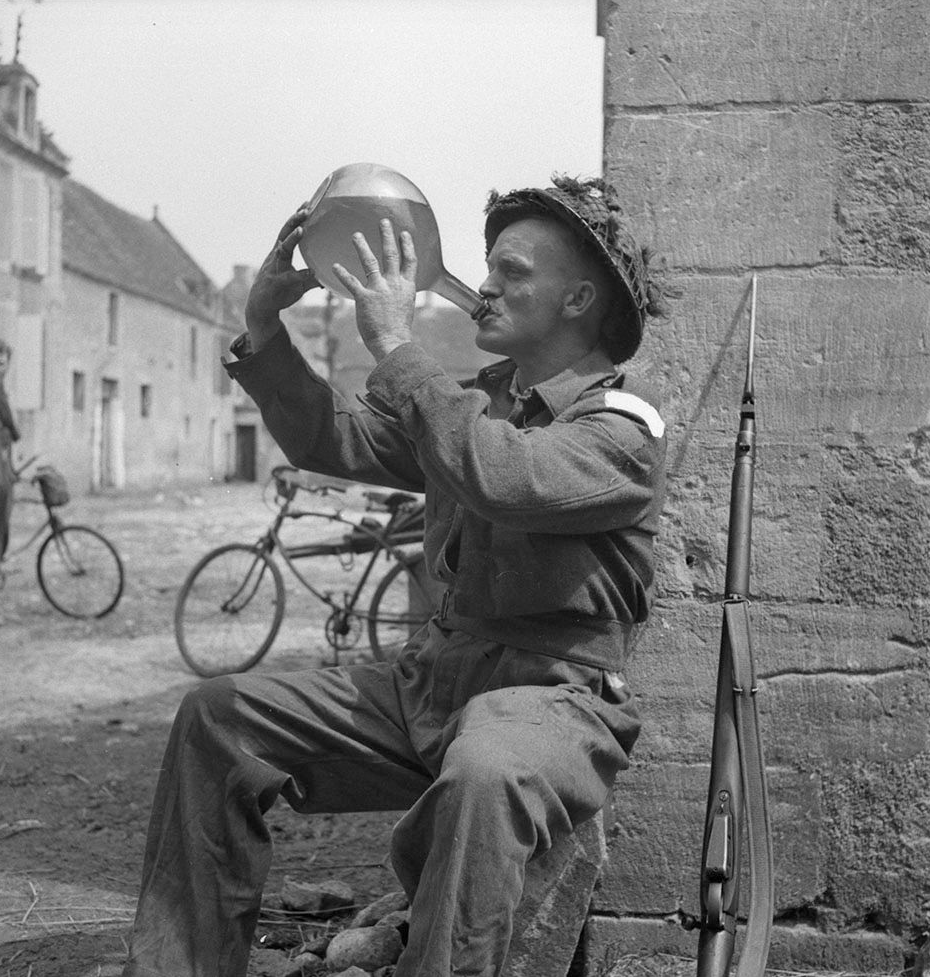
A famous photo from the Canadians in the Italian Campaign in the Second World War is the photo of Corporal James Alton Thrasher standing on a knocked out Hummel self propelled 88mm gun. The photo was taken on 26 May 1944 near Pontecorvo, Italy.
For me it is a photo I wanted to know more about and I started to look for the background on this photo and of course what became of Corporal James Thrasher. In this blog we are going to find out who he was and what he did.
Who was James Alton Thrasher?
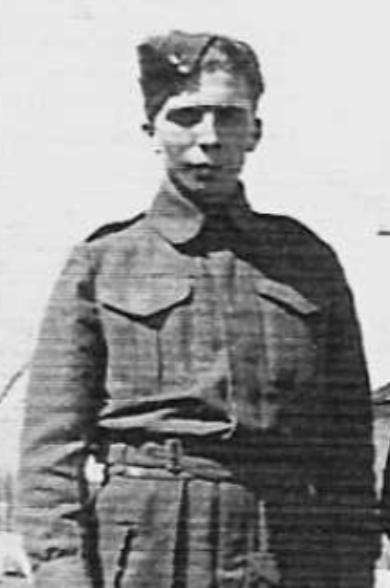
James was born on 8 September 1917 in Beachburg, Ontario.
He lived in Hornepayne, Ontario with his parents and he also had two brothers and two sisters. Before the war James worked as a diesel engineer and when the war broke out he joined the Non Permanent Active Militia. He joined the NPAM on 22 November 1940 and was added to the 2nd Battalion Lake Superior Regiment. He only stayed in the NPAM for one month and then left, most likely to move to Vancouver, BC to work there as diesel engineer. He lived in Vancouver for some years and was single.
On 21 January 1943 he enlisted in Vancouver and after completing his basic training he was shipped overseas to the United Kingdom. He disembarked here on 1 September 1943 and was placed in the 1st Canadian Infantry Reinforcement Unit (1 CIRU).
On 6 November 1943 he was transferred from 1 CIRU to the Westminster Regiment (motor) with whom he embarked for the Mediterranean.
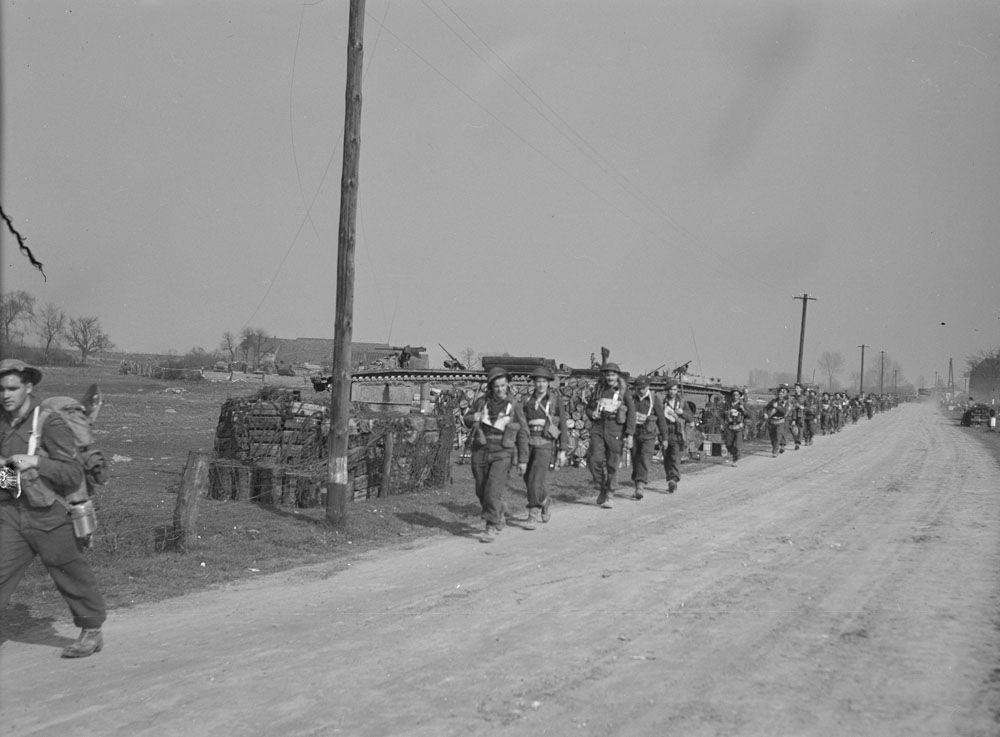
On 27 November 1943 James disembarked with the Wesminster Regiment in Italy as part of the 5th Canadian Armoured Division and they joined the war. The first months were spent on training in the area of Matera in the south of Italy, but mid January 1944 the Westminster Regiment were sent north towards the Sangro River where the battle was raging.
The famous photo of James Thrasher near Pontecorvo.
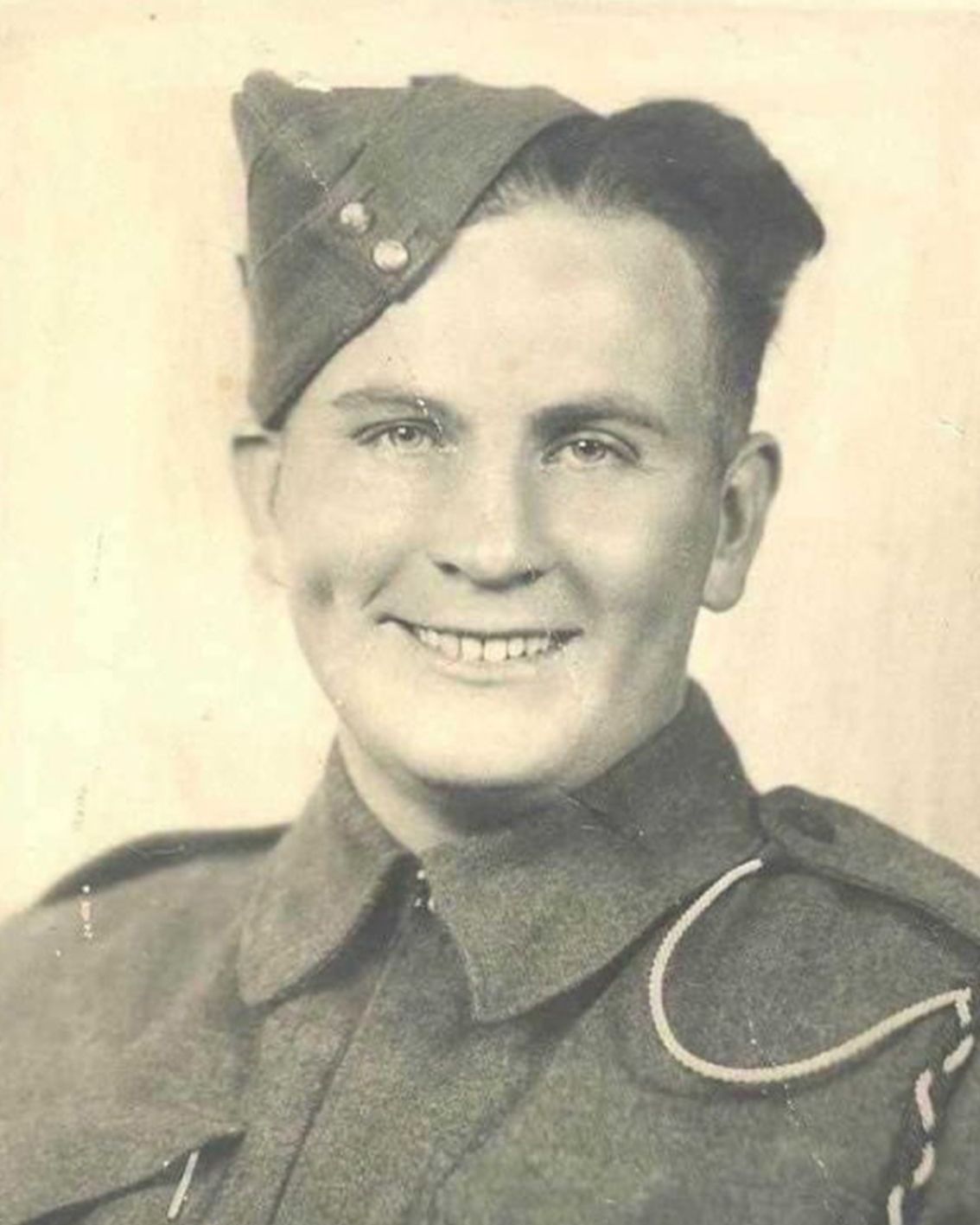
The photo from the Libraries and Archives of Canada shows a young Canadian soldier with a bandolier around his neck and his PIAT in hand. The caption of the photo is: "Lance-Corporal J.A. Thrasher of The Westminster Regiment (Motor), who holds the PIAT anti-tank weapon with which he disabled the German self-propelled 88mm. gun on which he is sitting, near Pontecorvo, Italy, 26 May 1944"
I went through the Westminsters war diary from May 1944 to see if there was something mentioned about James Thrasher or a knocked out self propelled gun. On 24 May 1944 when the Canadians had crossed the Melfa River near Pontecorvo there was a mention about a German self propelled gun being knocked out by a PIAT from A-Company of the Westminster Regiment. That could only be one man, James Alton Thrasher!
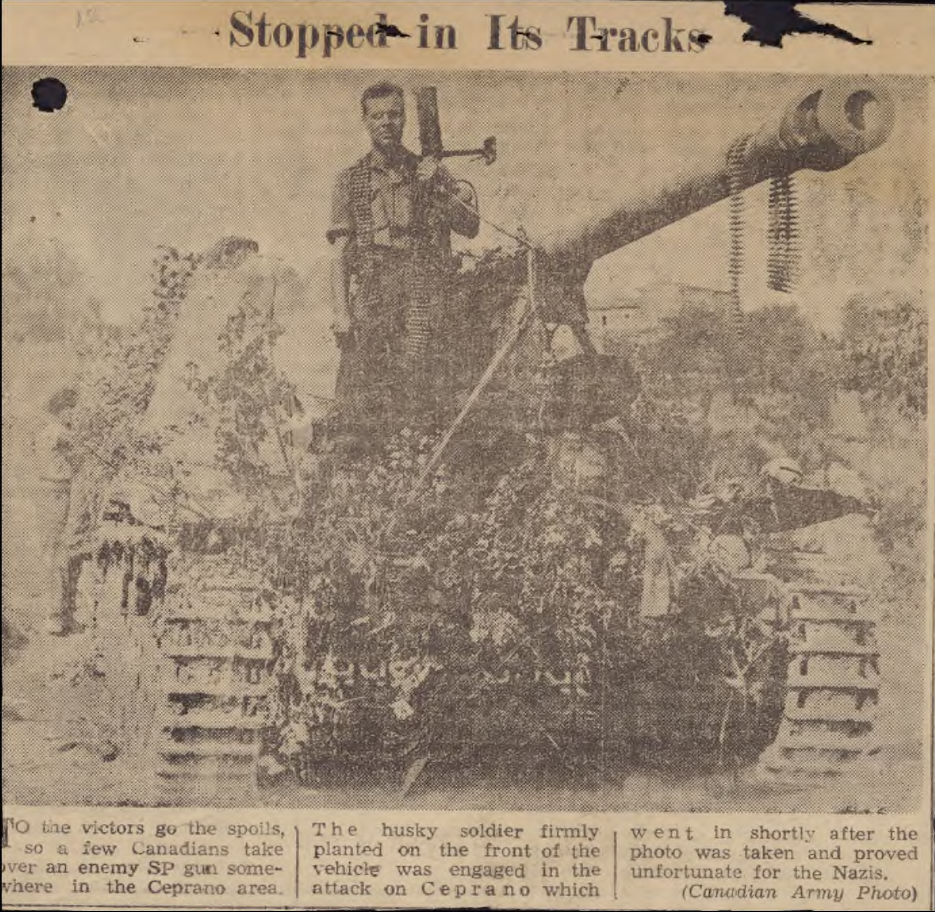
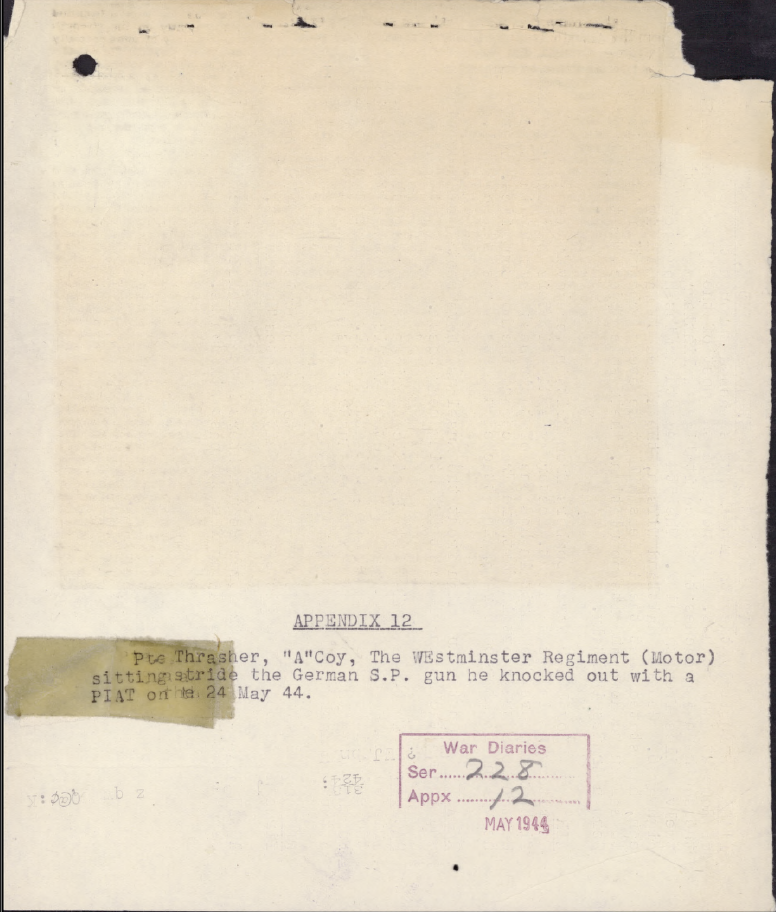
James was the PIAT gunner of A-Company of the Westminsters, only his name isn't mentioned in the war diary on the 24th but there was a reference to Appendix 12 in the back of the war diary. Scrolling through it a newspaper clipping from the famous photo from James standing on the knocked out Hummel self propelled gun was added to the war diary. On the back the caption was mentioned that Private Thrasher knocked out the German SP gun on 24 May 1944 with a PIAT.
To give an idea of the battle that 24th of May 1944 a part of the war diary of the Westminsters is added below:
"At 1420 hrs we were ordered to proceed with all speed to BENEDICTINE just East of the MELFA. Our convoy was very seriously handicapped by the traffic milling around in all directions, for the first half hour the C.O. was out in front of the convoy on foot pushing people out of our way. Soon we ran into a strip of road that was being very heavily shelled and everyone crouched low in their vehicles. A carrier was burning in the middle of the road and ammunition was going off in it and flying in all directions.
Word came down at 1500 hrs that forward troops heavily engaged and we are needed urgently, but it is not until 1600 hrs that we get completely past the milling traffic and can really get moving. At 1645 hrs we reach BENEDICTINE Crossroads. The situation is rather obscure. Tank fighting is still going on and tanks are being knocked out all around us. "A" Coy, we know are across the river, but whether they are being pressed or not, is not known.
In the meantime "A" Coy under command of the Lord Strathcona's Horse, moved off from the assembly area at 1000 hrs. Their carriers were split up, some acting as first aid vehicles and some going ahead of the tanks as recce. The going up for "A" Coy, the first wheeled vehicles past the Hitler Line was extremely difficult. The companies drivers did a wonderful job in keeping the column rolling close behind the tanks. Three vehicles were lost from shelling on the way up. Before reaching the river one of "A" Coy's carriers spotted an S.P. German gun. They hit the ground and engaged it with a 2" Mortar, the third shot being a direct hit, knocking the gun out and killing the crew. Lt-Col. Griffin was very pleased with the work of our carriers both in their co-operation with the tanks and in their first aid duties.
At 1500 hrs the MELFA was reached and the Lord Strathcona's Horse were heavily engaged by enemy tanks, A/Tk and S.P. guns. The Lord Strathcona's Horse tanks stuck right on the job and the crews displayed great courage and devotion to duty, sacrificing themselves in carrying out their orders to get a company across the river. Three "Honey" tanks and a carrier were across the river at 1505 hrs and "A" Coy were debussing preparatory to crossing. The crossing covered by M.G's on the flanks was unopposed, although German mortar fire was coming down consistently on the river bottom. On reaching the West bank "A" Coy platoons fanned out and at once began to run into small pockets of enemy. Quick work was made of these, the Germans showing no real desire to fight after some of their number had been killed. An SP gun was encountered and engaged with a PIAT (see Appx 12) the forward sprocket being hit and the track jammed. The crew streamed out and were soon disposed of. On the right flank a section without a PIAT came across a Mk IV tank, and having no other means at their disposal, knocked it out by throwing Number 36 Grenades down the open hatch, killing the crew.
By 1615 hrs the whole company was across and the bridgehead was getting firmly established. 25 prisoners were already on their way back and a similar number had been killed. One of "A" Coys platoon positions was over run by a troop of tanks and one section wiped out. The platoon was drawn back and the bridgehead was made more solid."
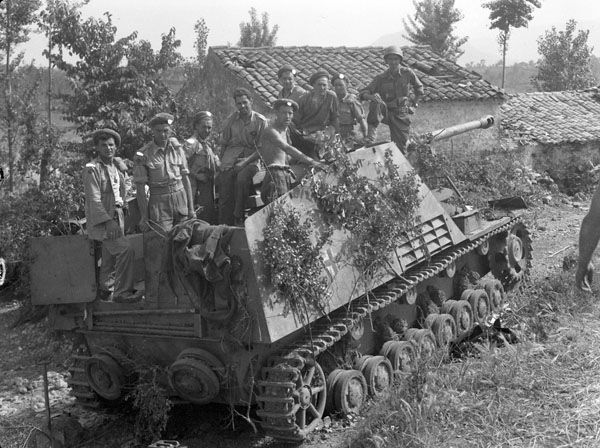
The photo from James on top of the Hummel self propelled gun was taken two days later on 26 May 1944. There is also a second photo taken from the same Hummel which you can see below. The caption of that photo reads the following: "Personnel of the Westminster Regiment, 5th Canadian Armoured Division, examining a self-propelled field Howitzer Hummel knocked out by PIAT gun, near Pontecorvo, Italy, 26 May 1944."
Wounded in action.
On 4 September 1944 James gets wounded in action near Coriano where they had to cross the Marano River in support of the tanks of the 8th New Brunswick Hussars. Here A-Company came under heavy shelling by mortar fire and the war diarist described the following: "Then the shells came like all hell turned loose. For what seemed an eternity, Jerry pounded shell after shell upon the forming up place. Casualties were light but nearly all fatal."
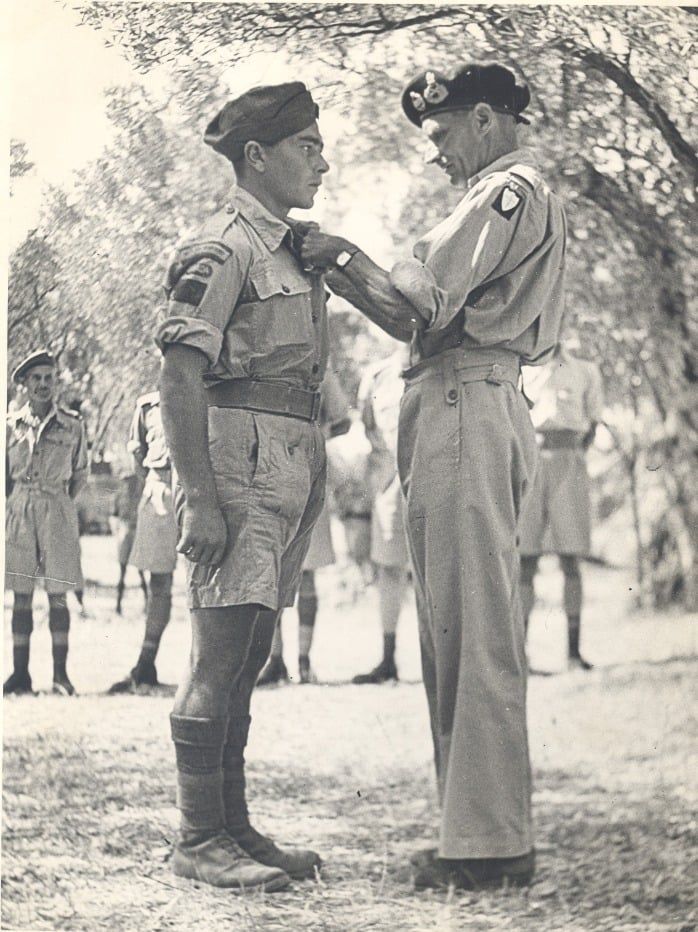
The nature of the injuries are not known as they are not mentioned in his military files. What we do know is that James' remained on duty and at the end of September 1944 he gets promoted to Acting Sergeant.
His last battle.
On 11 December 1944 the Westminster Regiment were at the Lamone River near Villanova. Here they had to cross the Lamone River, but at 10.00 hours the war diarist notes the following:
"At 1000 hrs "C" Coy first reported signs of a counter attack. Tanks were moving up and infantry were observed moving in the area. This attack lasted until 1100 hrs. Two tanks were disabled by PIATS and later bombed by aircraft. "A" Coy was counter attacked at 1015 hrs. The enemy tanks infiltrated the platoon positions though the infantry were driven back. Again two tanks were disabled by PIATS. It was later found from prisoners that the force used against our troops had been brought from the Faenza front as a counter attack element against the Lamone bridgehead. However, their first effort was driven off with only light casualties to us as against heavy casualties in men and equipment to Jerry."
It's not known if James was responsible for knocking out the two tanks mentioned in the war diary. Throughout the 11th of December the Westminsters had to deal with several German counterattacks.
"Shelling and mortaring were very heavy in the forward areas, much of the shelling being done by SPs. At 1500 hrs a second counter-attack was observed forming up but was broken up by the medium and field artillery. Jerry snipers who were in the area killed CSM Salsbury of "C" Coy and wounded others during the day.
A light scale bridge was being built across the Lamone to accommodate priority vehicles of the units which were on the other side. This was to be finished by midnight but was not completed until 0700 hrs. Capt. E.V. Ardagh spent most of the night rounding up vehicles and collecting together the "light scale" group of vehicles.
At 2000 hrs, German tanks and infantry once more attacked and were pushed back. In spite of very heavy shelling however, they were able to recover the four tanks which had been knocked out during the day. Lieut. W.E. Tyler of "A" Coy was badly wounded and his platoon Sergeant, Sgt. E. Thrasher killed while out on a tank hunting patrol with a PIAT. An SP scored a direct hit on the building near which the two were moving. More enemy tanks reported to be moving south towards the Westminster area were kicked around by the medium arty and soon withdrew."
James was killed instantly and it's not known where he was buried in a field grave. He now rests at Ravenna War Cemetery.
Sources: Libraries and Archives of Canada & Project '44.
Read about our journeys in our blogs
This is our Explore Diary