

The Highland Light Infantry of Canada in Normandy
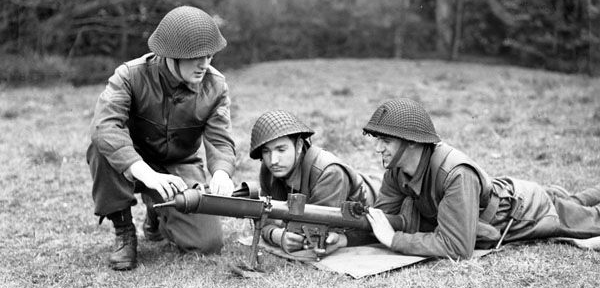
Sgt. D. Wilson, Pte. J. Brunelle, Pte. A. Munro, all of the Highland Light Infantry of Canada, on Piat training, during landing and advancing inland exercise
Introduction
It was early 2026 when we decided to go to Northern France for what we call a "recce" (reconnaissance). Basically, it's just going on a tour with one or more friends and taking war diaries, photos, books, and maps with you. After many years of research, we know it's important to be there in person. Online Street View is helpful, but being there gives you a look and feel that no digital world can offer.
In our backpacks, we carried our research materials, food, and drinks. On our feet were hiking shoes, and in our minds, nothing but enthusiasm. Modern as we are, we carried an iPad with us, and on that iPad was a specific photo of a soldier from the Highland Light Infantry of Canada drinking cider. We had posted the photo on social media, and a discussion started about whether it was cider or Calvados. We simply thought it was a great picture. Our mission: find the exact location. And this wasn't easy. Later, I will explain how we found it.
First, to provide some background, I have used the war diaries below to give a general account of the Highland Light Infantry of Canada during June and July 1944. That background is not necessarily important to explain how we found the location, but it is important to do the men of that regiment justice. Each and every one of them deserves our everlasting gratitude, and by remembering their actions, we honour their legacy.
The Highland Light Infantry of Canada
1-4 June 1944
The first days of June 1944 started easy for the men. In England the weather is nice and warm. Preparations for the coming operation are largely complete. Apart from weapon inspections and light physical training, there was little formal activity. The days were mostly spent waiting. Soldiers passed the time with sports, reading and recreational activities within the camp. Nevertheless, everyone sensed that something significant was coming.
Behind the scenes, on 3 June 1944, preparations intensified. Emergency rations, cooking equipment, vomit bags and sea-sickness tablets were distributed. Everything suggests that this was no longer another exercise!
On 4 June 1944, the day began in the middle of the night. At 2:00 am the men were awakened. After turning in blankets and eating an early breakfast, the first groups departed for the embarkation points. Loading bicycles, equipment and supplies caused some delays, but eventually everyone embarked safely. Conditions were different from vessel to vessel. Most companies have proper sleeping accommodations, but B Company was forced to sleep on an overcrowded floor.
Heavy winds and rough seas in the Channel forced the operation to be postponed. The troops were temporarily allowed ashore under strict security and taken to recreation centres near the harbour. There they were able to wash, enjoy a hot meal and receive cigarettes as a gift from the Canadian government. Despite the disappointment, morale remained high. Some men still believed this was simply another exercise. Yet the scale of the preparations suggested otherwise.
5 June 1944
The issue of sea-sickness tablets around 10:00 am provided the first unmistakable sign that the invasion was about to begin. Relief that the long wait was finally over. At approximately 1:30 pm the ships began leaving the harbour. There were no marching bands or cheering crowds. Only a handful of dock workers silently waving goodbye. On the bridge, a piper played 'The Road to the Isles' as the 9th Canadian Highland Brigade headed toward France.
As the fleet moved into the Channel, more and more ships join the armada. The men witnessed an extraordinary sight; landing craft, troop transports, cruisers and battleships stretching as far as the eye can see. The size of the invasion force inspired confidence. At 4:00 pm sealed maps were opened. Only then the soldiers learned their true destination. The exercise names disappeared; “Poland” suddenly becomes Caen. Operation Overlord is real.
The remainder of the day was spent in briefings. Plans rehearsed countless times are reviewed once more, now using the actual place names. As night falls, weather conditions got worse and many men became seasick. Some remain on deck in the rain because the fresh air offers relief. Others lie below, exhausted and miserable. But after four years of training and preparation, the Highland Light Infantry of Canada was finally on its way to war.
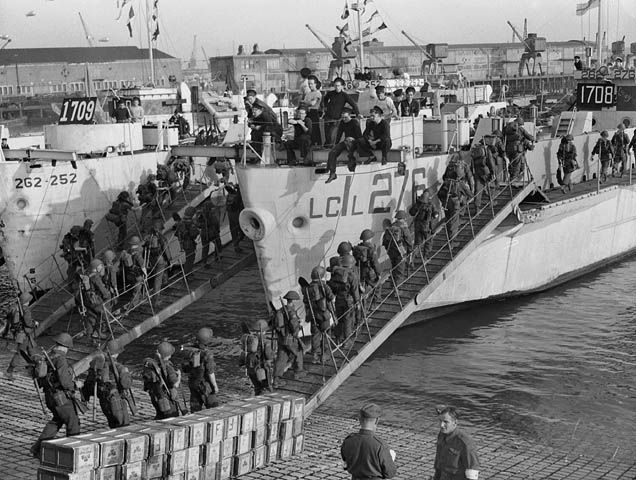
The Highland Light Infantry boarding LCIL 276 (Landing Craft Infantry Large), possibly during an exercise in May 1944 (source: Library and Archives Canada)
6 June 1944
The sea remained rough and the weather unsettled. Long before dawn, many men were already on deck. Some watched the flashes of battle on the horizon as Airborne troops fought to secure key objectives inland. With the morning light came a remarkable sight; The sea is covered with ships of every description. The presence of powerful warships provided reassurance and reminds the men that they are part of the largest amphibious operation in history.
The coast of France came into sight. The first assault waves had already landed and villages could be seen along the shoreline, and smoke arose from areas where fighting was already underway. Originally, the HLI of C was scheduled to land near St. Aubin. However, strong German resistance forced a change of plan, and the battalion was redirected to White Beach near Bernières-sur-Mer. At approximately 11:40 am, the landing began.
The Navy did a great job, bringing the troops ashore in relatively shallow water. Men went off the landing craft carrying bicycles and equipment. One vessel struck a mine during the approach, but remarkably no casualties were suffered. The beach had only little resemblance to the carefully rehearsed exercises. Vehicles, tanks and troops were jammed together amid obstacles, wires and wreckages. The scene was chaotic! Men thought about how fortunate they were that German aircraft were nowhere to be seen.
Moving inland proved difficult. Roads were blocked by damaged vehicles and debris. Around 1:30 p.m. the battalion stopped behind the church at Bernières, where the men were finally able to eat and reorganize. Later, they advanced toward Bény-sur-Mer and there the HLI of C experienced its first enemy mortar fire. At the same time, they encountered French civilians welcoming their liberators with milk, wine and heartfelt wishes of good luck. German stores and barracks were quickly stripped by local residents eager to reclaim whatever they could.
As darkness approached, the order arrived to halt for the night. Reports indicate German armour moving north from Caen, so defensive positions were hurriedly dug around the village. D-Day ended without the battalion having fought a major engagement, but the men are finally in enemy held territory. After four years of waiting, the war had truly begun.
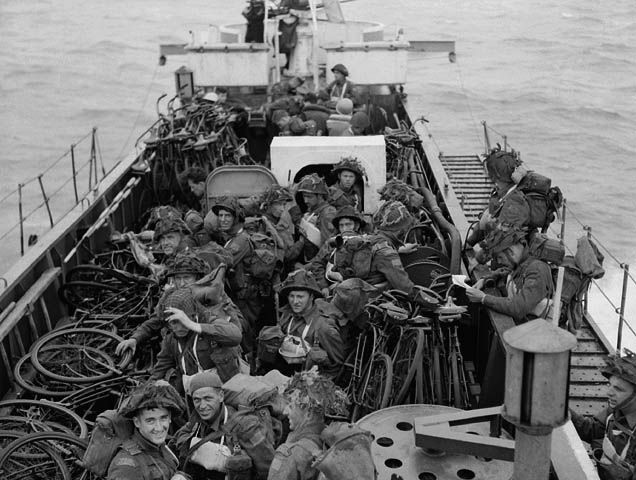
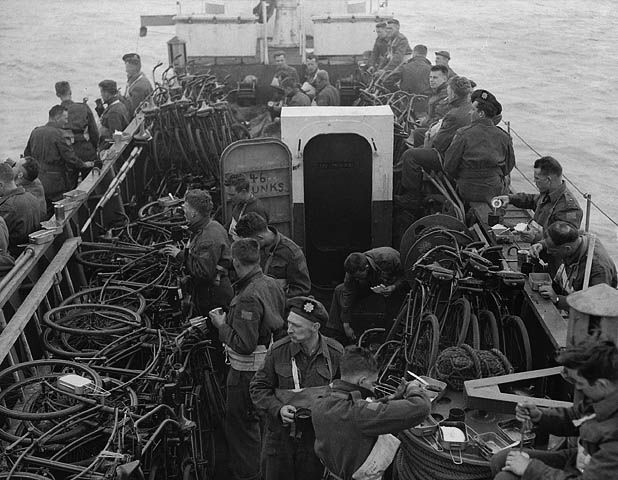
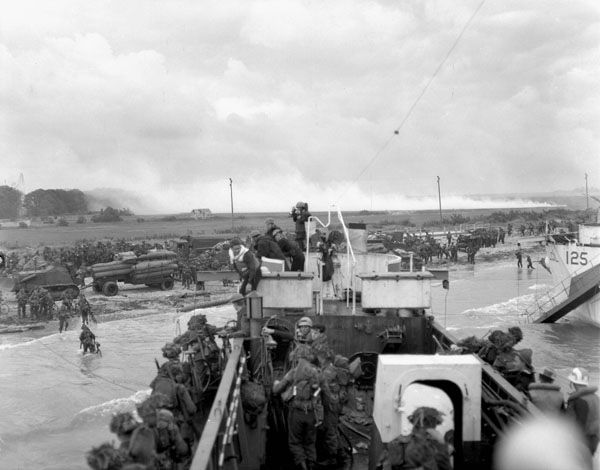
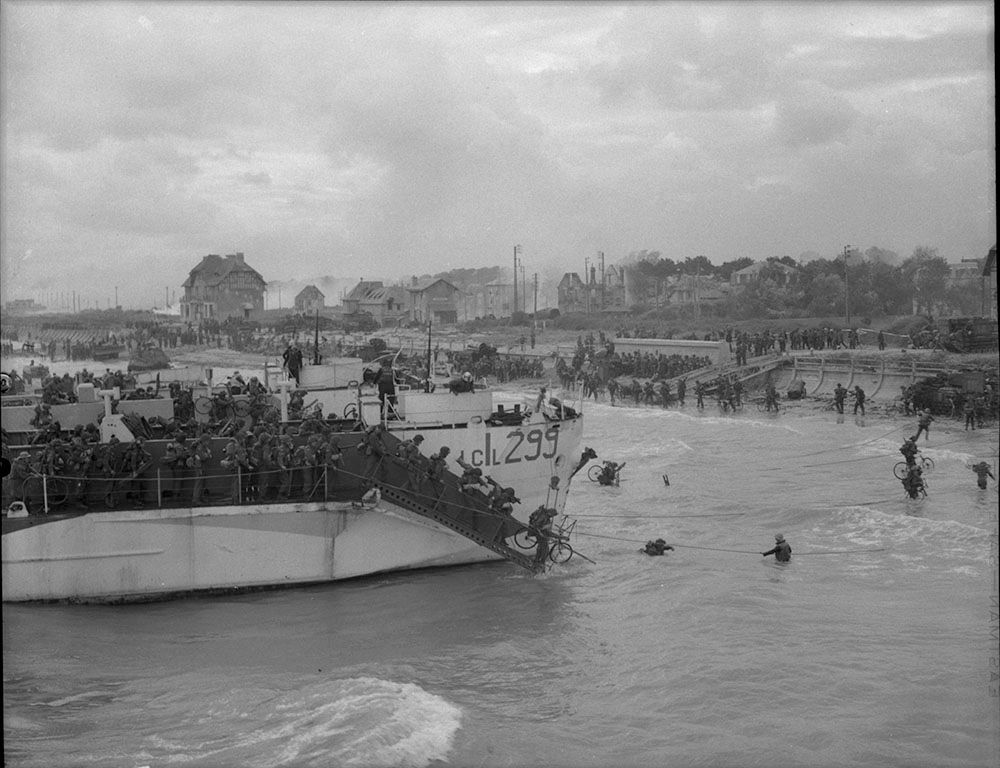
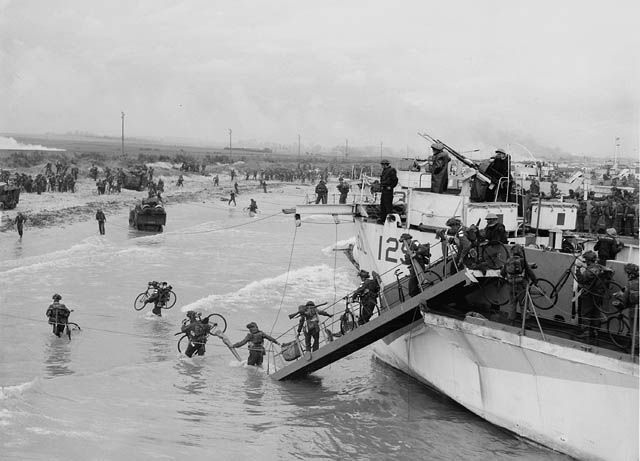
Personnel of the Highland Light Infantry of Canada and the North Nova Scotia Highlanders aboard a LCI(L) en route to France and going ashore. Source: Library and Archives Canada
(LCI(L) stands for Landing Craft Infantry Large)
7 June 1944
The night was relatively quiet. Early in the morning, the battalion received orders to continue the advance and complete the objectives originally assigned for D-Day. The first German prisoner taken by the HLI is brought in by D Company. Progress is slow and frustrating. The North Nova Scotia Highlanders and supporting Canadian tanks lead the advance toward Authie and Buron. Meanwhile, reports arrived that German armoured forces were moving north from Caen.
The feared counterattack soon materialized. Around mid-afternoon, Panther tanks from the 12th SS Panzer Division entered the battle. The North Novas and the Sherbrooke Fusiliers (27th Canadian Armoured Regiment) became heavily engaged in bitter fighting. Canadian troops faced mortar fire, sniper fire and determined German counterattacks. Confusion was increased by German deception tactics, including the use of captured Canadian radio procedures and call signs to transmit false orders. The battle in and around Les Buissons (Villons les Buissons) was extremely hard, later naming an intersection in the town "Hell's Corner".
The HLI is moved forward but never had the opportunity to launch a major assault. Instead, together with neighbouring units, the battalion helped establish a defensive position later referred to as the “fortress” in order to stop a possible German breakthrough. By evening, the badly battered North Novas and supporting armour withdrew. Their casualties were severe; The North Nova Scotia Highlanders suffered 75 men killed this day! Although the HLI had not yet been heavily engaged, the tension and uncertainty of the day had been immense.
Killed in action were:
- Arnold C. Farrow - 23 years old
- Albert Parsons - 24 years old
- Richard L. Armstrong - 23 years old
8 - 19 June 1944
The threat of German counterattack remained high. While their positions were further improved, C Company discovered eight German soldiers inside their lines. When one of them attempted to escape, a short but intense fight with grenades broke out. Sergeant Coburn was fatally wounded.
A new attack towards Buron was postponed. The North Nova Scotia Highlanders first needed time to recover from their heavy losses on 7 June. The left flank also remained uncertain because German positions at Galmanche and St. Contest had not yet been eliminated.
On 11 June, a strong patrol of around one hundred men under Major Hodgins moved towards Buron. They reach the centre of the village and discovered that several buildings contained only dead German soldiers. However, the enemy was still present on the outskirts of the village. Machine guns and mortars opened fire on the HLI of C. Lieutenant Harvey and another soldier were wounded there. It was believed that around fifteen German casualties were inflicted. Later that day, the attack on Buron finally appeared ready to begin. The plans were prepared: B and D Company were to enter the village, while A Company was to push on towards the high ground beyond Buron. As the men stood ready and the artillery had already begun, the attack was cancelled once again. British armoured forces had arrived and the plans changed.
The days that followed were relatively calm and the HLI learned that waiting was part of war too. Their task was to hold German forces in place. Patrols were send and it was learned that Germans too continued to strengthen their lines.
Killed in action were:
- Callum G. Coburn - 8 June 1944 - 26 years old
- John J. Romanoff - 9 June 1944
- William S. McQueen - 9 June 1944 - 24 years old
- John D. Hasson - 10 June 1944 - 20 years old
- John R. Taylor - 13 June 1944 - 25 years old
- Russel C. Woinoski - 13 June 1944 - 23 years old
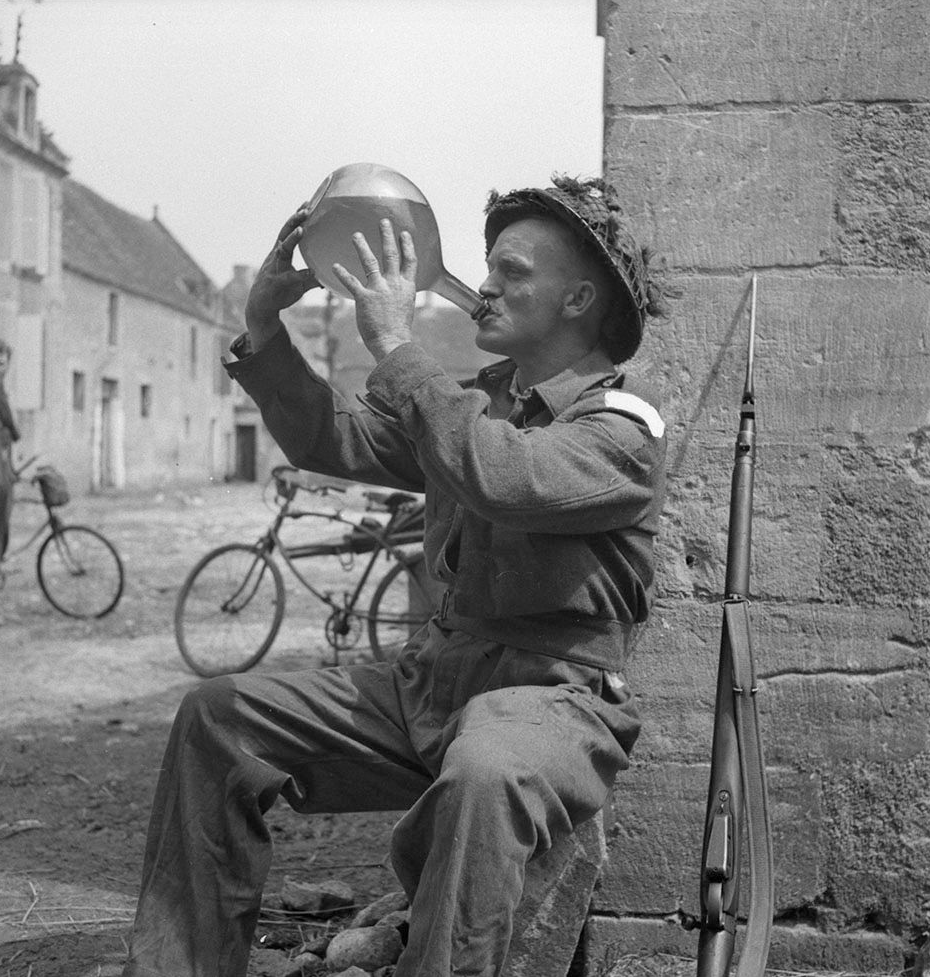
This was the photo we took with us, determined to find! Sergeant C. Orton of The Highland Light Infantry of Canada drinking cider ( or calvados) Source: Library and Archives of Canada
20 June 1944
A day like the days before, but nevertheless mentioned separately. The men were still dug in at positions in and around Les Buissons (Villons-les-Buissons). During the day Lt. Ken Bell of the Public Relations branch of the army toured the different coy localities. He took a number of pictures of the boys in their spare time. They were to be released for local papers back home. On a farm several photos were taken, as seen on the then&now video below:
- Sergeant C. Orton of The Highland Light Infantry of Canada drinking cider (or Calvados)
- Personnel of the Highland Light Infantry of Canada milking goat. (L.-R.:) L/Cpl. H.G. Murray, Pte. T. Hillcoat
- Private F.L. Galvert and Lance-Corporal Gooding of The Highland Light Infantry of Canada milking a goat
- Private R.O. Potter of The Highland Light Infantry of Canada repairing his bicycle
- Corporal N.S. McDonald of The Highland Light Infantry of Canada gathering eggs
And here our search for the location started. We knew on 20 June 1944 the men were in Les Buissons and now we were there 82 years later. But how did we find this location?
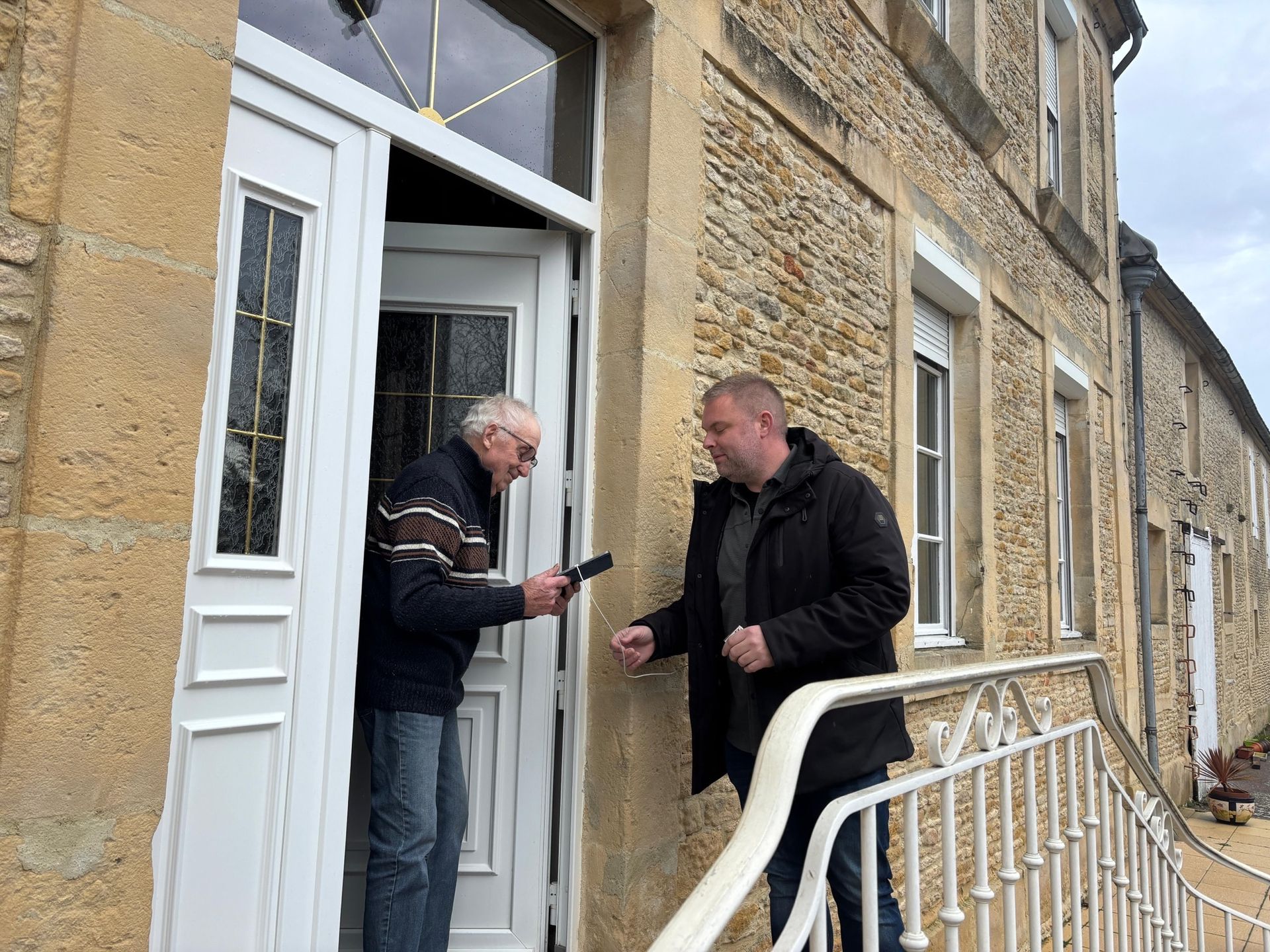
The farm
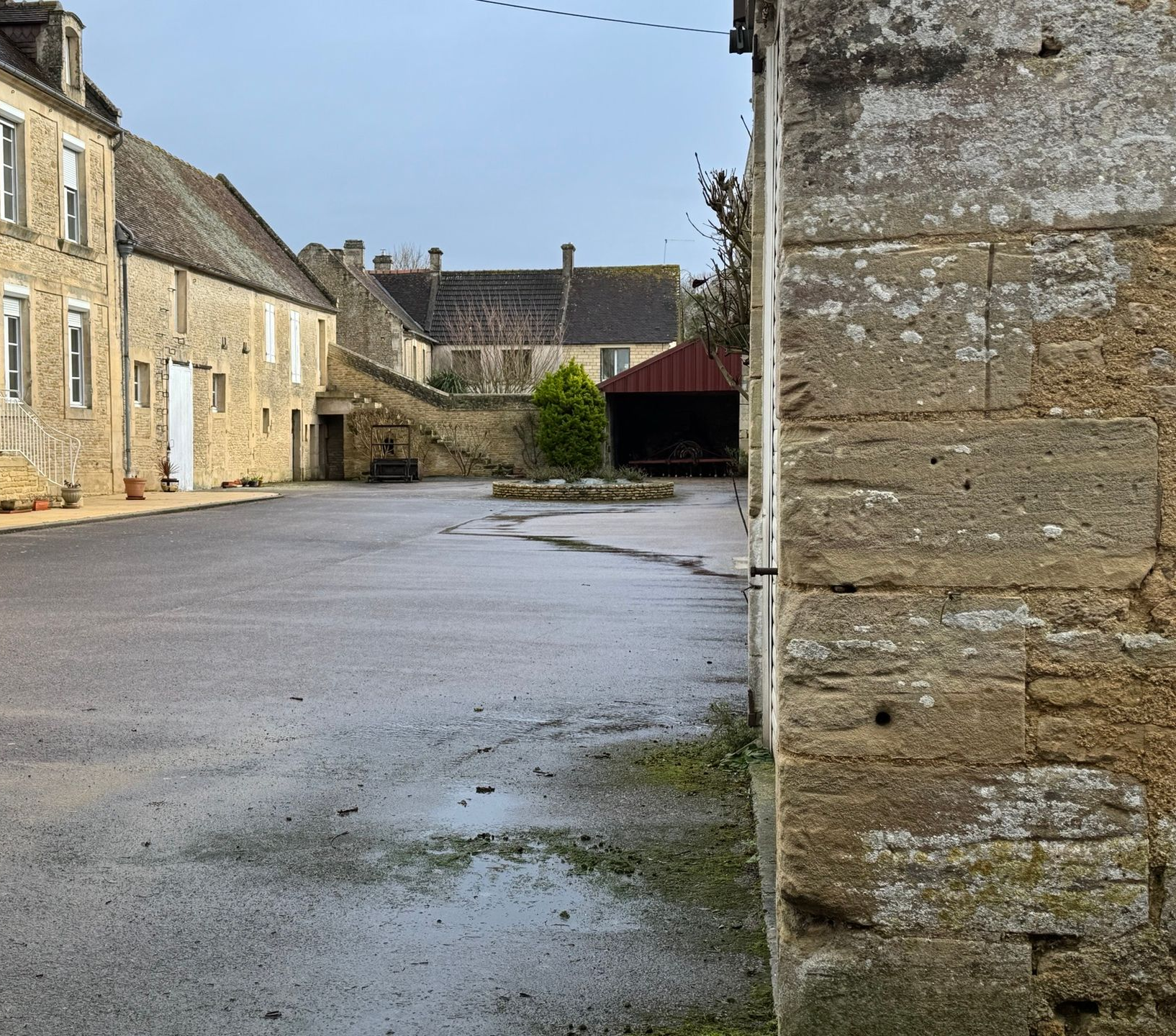
Well, it wasn't easy. As far as we could determine, nobody had ever posted them with the location. A search in Google didn't bring us further. Absolutely none of the buildings along the road matched. We started with the Cider drinking soldier, thinking he would be sitting at a wall near a town square. So after finding nothing on Google, we decided to go and have a walk in Les Buissons. We created a map with the locations of the companies and went to every location. None matched, but when we almost walked out of Les Buissons, we saw a farm with a big courtyard. Ringing the bell wasn't possible, but the gate was open and we decided to walk to the front door. During these meters, our mouths fell open and words became a kind of mumbling that only close friends could understand. We recognized so many locations of the photos from the Library and Archives of Canada!
Sadly nobody was home so we left without taking photos. We felt that the courtyard was their private property and we needed to respect their privacy. So the next day we went back. And luckily, the owners were home. The farm the owner we spoke with lives in, had always been in the family and from being a kid he remembered the war. He had never seen these wartime photographs of his family's farm before.
We asked permission to make photos and video and he allowed us to walk his property and make photos of everything we wanted. We promised him to send the photos to him by mail. Sadly they were returned because of an invalid address, but we will bring them next time we are in the area.
Please note: it's not a secret where this farm is. If we can find it, so can others. But please, always respect their privacy and ask for permission.
Bloody Buron
Despite the relatively low casualties in June, things would get harder. Being a D-Day objective, the first fighting for Buron took place on 7 June 1944, one day after the Allied landings. As Canadian forces pushed south toward Caen, they ran into a powerful German counterattack launched by the 12th SS Panzer Division. The advance stalled and the village remained under German control for several more weeks.
But the town had to be captured and the fight for Buron reached its climax on 8 July 1944 during Operation Charnwood. Canadian troops, led by the Highland Light Infantry of Canada and supported by tanks of the Sherbrooke Fusilier Regiment as well as British artillery, launched a major assault on the village. Defending the position were soldiers of the 25th SS Panzergrenadier Regiment, part of the 12th SS Panzer Division, who fought stubbornly from well-prepared positions.
The battle developed into a costly and bitter fight. In a single day, the Highland Light Infantry of Canada lost 262 men, including 62 killed. Despite these heavy losses, the Canadians succeeded in capturing Buron. The fall of the village removed a key German defensive position north of Caen and was important for the final capture of Caen itself.
To be honest, Bloody Buron isn't a story to write in three paragraphs, but going into detail would make this blog to long. That's why we are working on a follow up of this story which will be posted on our website soon.
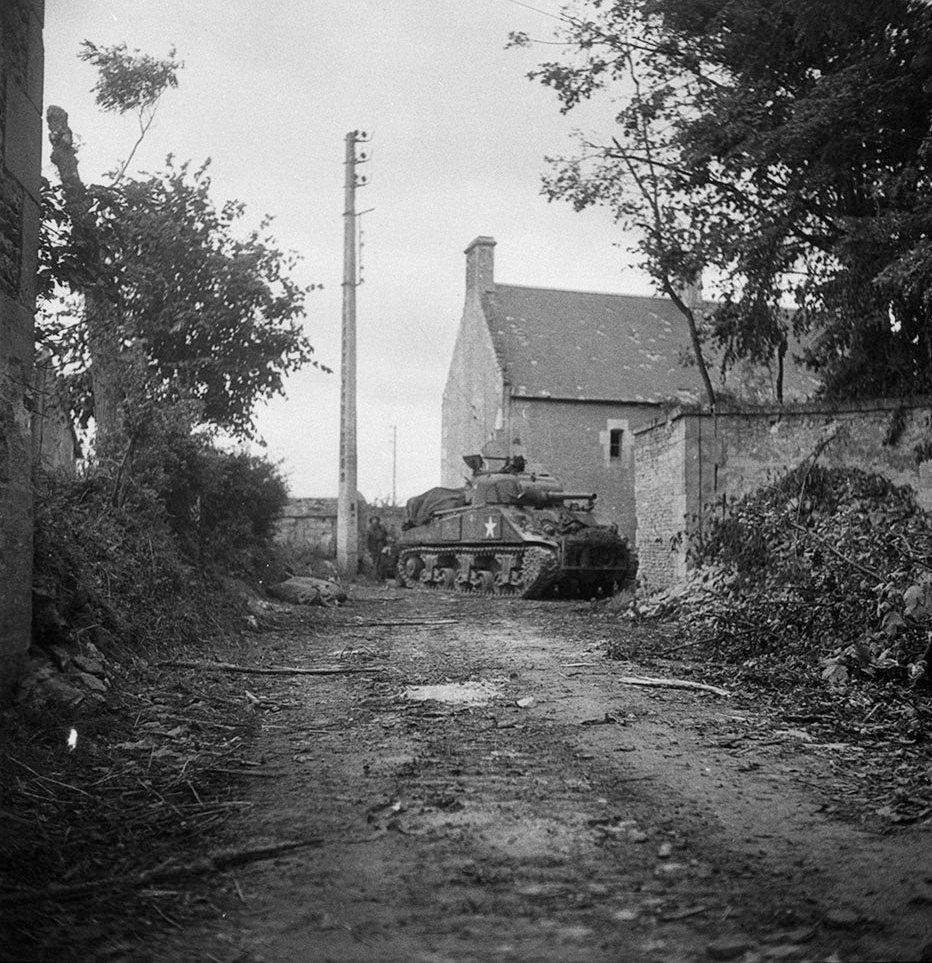
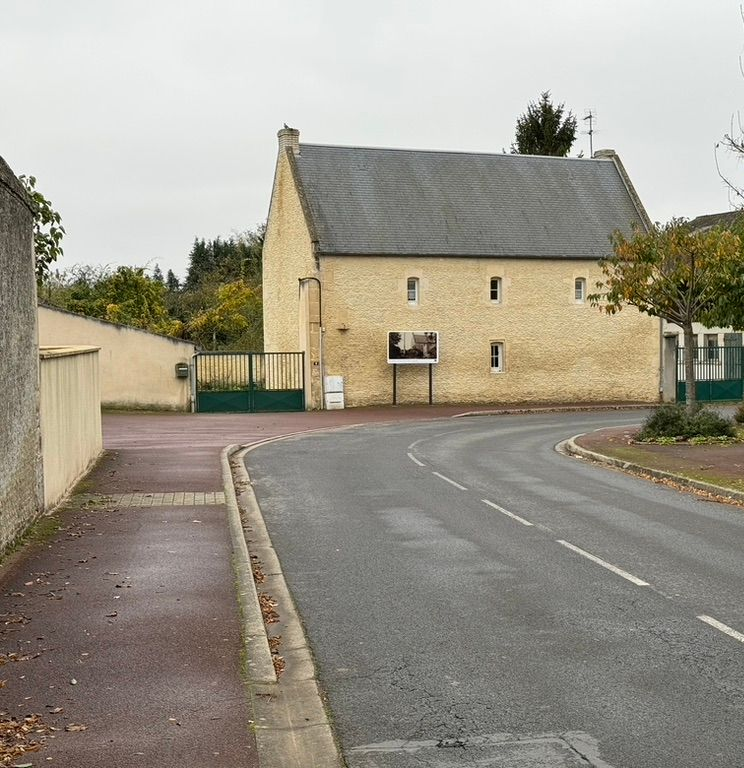
A tank of the Sherbrooke Fusiliers in Buron.
In the days following 20 June 1944, more men were killed in action, especially on 8 July 1944 during the fighting for Bloody Buron. May they all rest in peace.

Sources: CWGC, Library and Archives of Canada, Project44.ca, The Victory Campaign by Colonel C.P. Stacey
Read about our journeys in our blogs
This is our Explore Diary