

They never returned.... the loss of Halifax HR853

We don't often post about aircrew during the Second World War because our main focus is the army, but in this case I'd like to tell the story of a bomber crew which interests me very much.
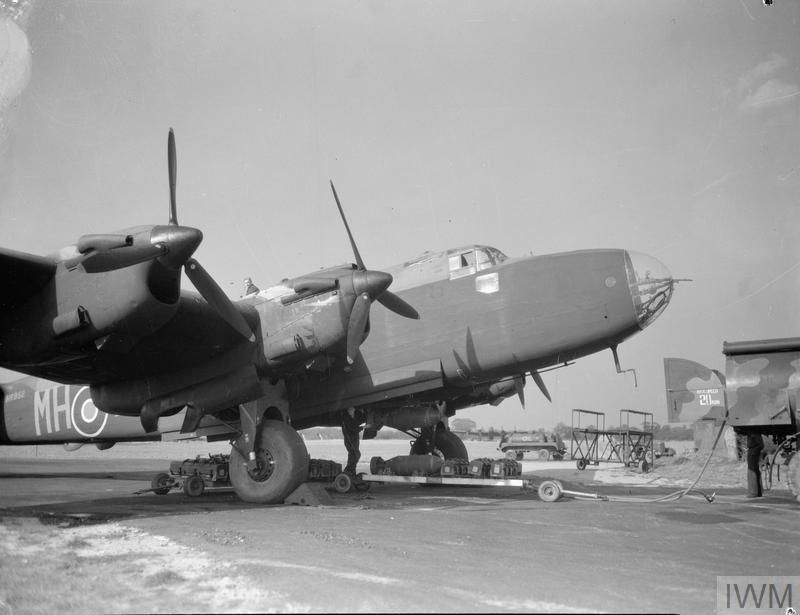
Long before we founded the D-Day Dodgers Foundation I was busy with the soldiers buried at Uden War Cemetery in the Netherlands. While going through the names and dates of the men buried there a crew caught my attention; the crew of Handley Page Halifax II HR853 from No. 51 Squadron RAF. This Halifax crashed in the Sluispolder near Malden, Netherlands on 26 May 1943. As I live close to Malden and have family living there, I started to ask around if someone knew more about this crash. Surprisingly nobody could tell me more and together with a colleague of mine, Jan, we went to a local resident who lived there during the war in the Sluispolder. This visit didn't bring up any more information and we got some names of people who lived there too, but still no information about the crash.
The online databases didn't give clear information about the crash either. On one page it was stated that it was shot down by a night fighter, the other page mentioned that it was anti-aircraft fire (FLAK). The only thing that was clear and known to me was that it was a Handley Page Halifax II belonging to No. 51 Squadron RAF with a combined crew of British airmen and one Canadian.
What had actually happened to HR 853?
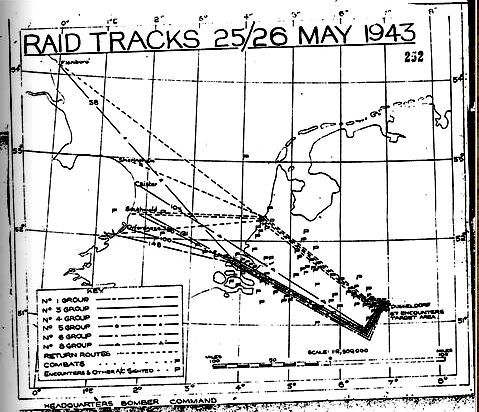
On May 25, 1943, at 11:53 PM, a Handley Page Halifax II bomber of No. 51 Squadron of the Royal Air Force departs from RAF Air Base Snaith near Pollington, Yorkshire, on a bombing mission to Düsseldorf. The entire mission involves 759 aircraft taking off from various airfields in England and converging off the coast near Zeeland. From here, they will fly to their “target” Düsseldorf to drop their deadly bomb load.
The mission is mapped out in advance by so-called “pathfinder” Mosquito fighter-bombers that drop markers on the area to be bombed. Due to low-hanging clouds and the suspicion that the Germans had laid down diversionary markers, this mission results in a complete failure. The deadly bomb load is dropped over a wide area, and the bombers must then make their way back to England. En route, several bombers are shot down by both German Luftwaffe night fighters and anti-aircraft fire (FLAK). In total, 27 bombers are shot down that night.
Halifax HR 853 was hit by FLAK and crashes into the Sluispolder behind Malden and the Weezenhof in Nijmegen. The entire crew perishes in this crash, and around 02:30 hours on the 26th of May 1943.
Who were they?
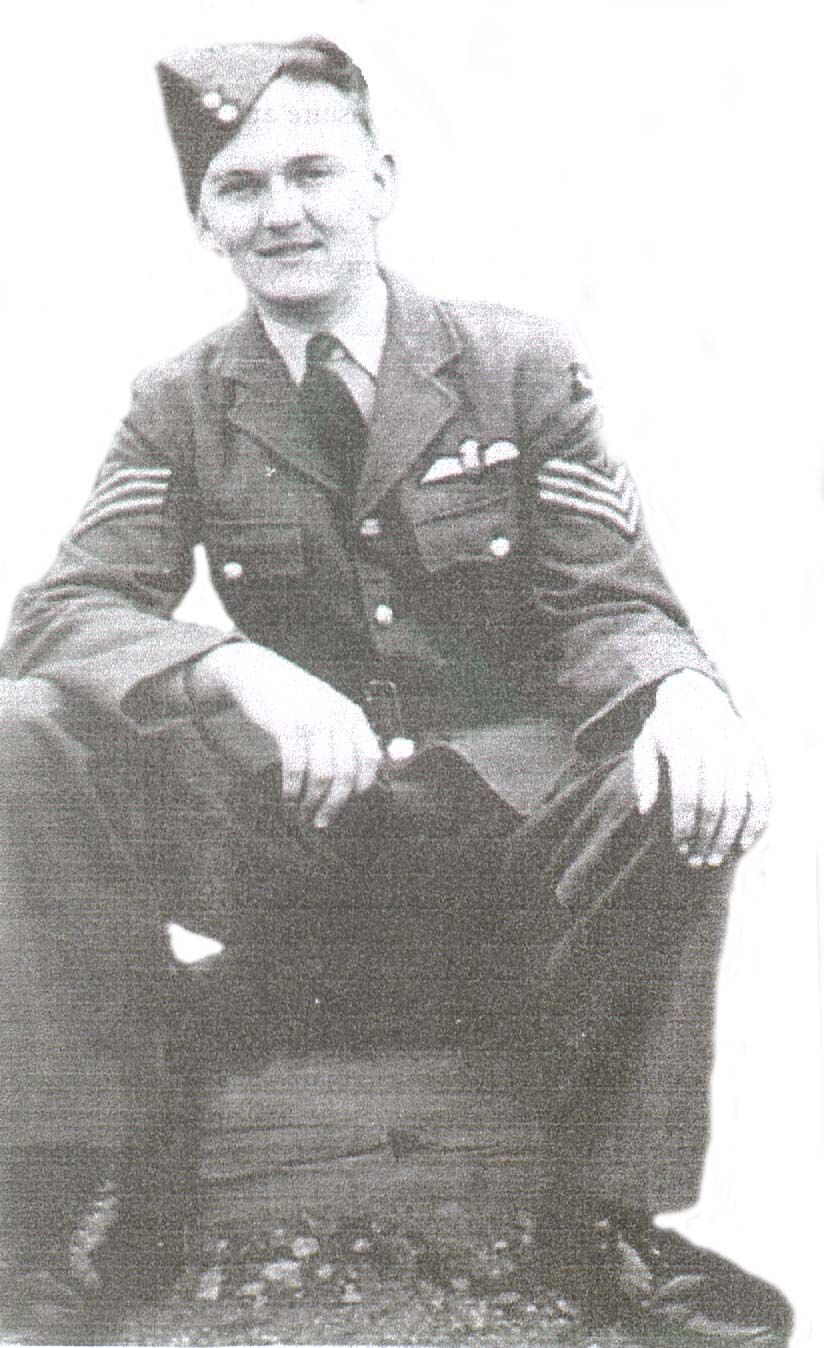
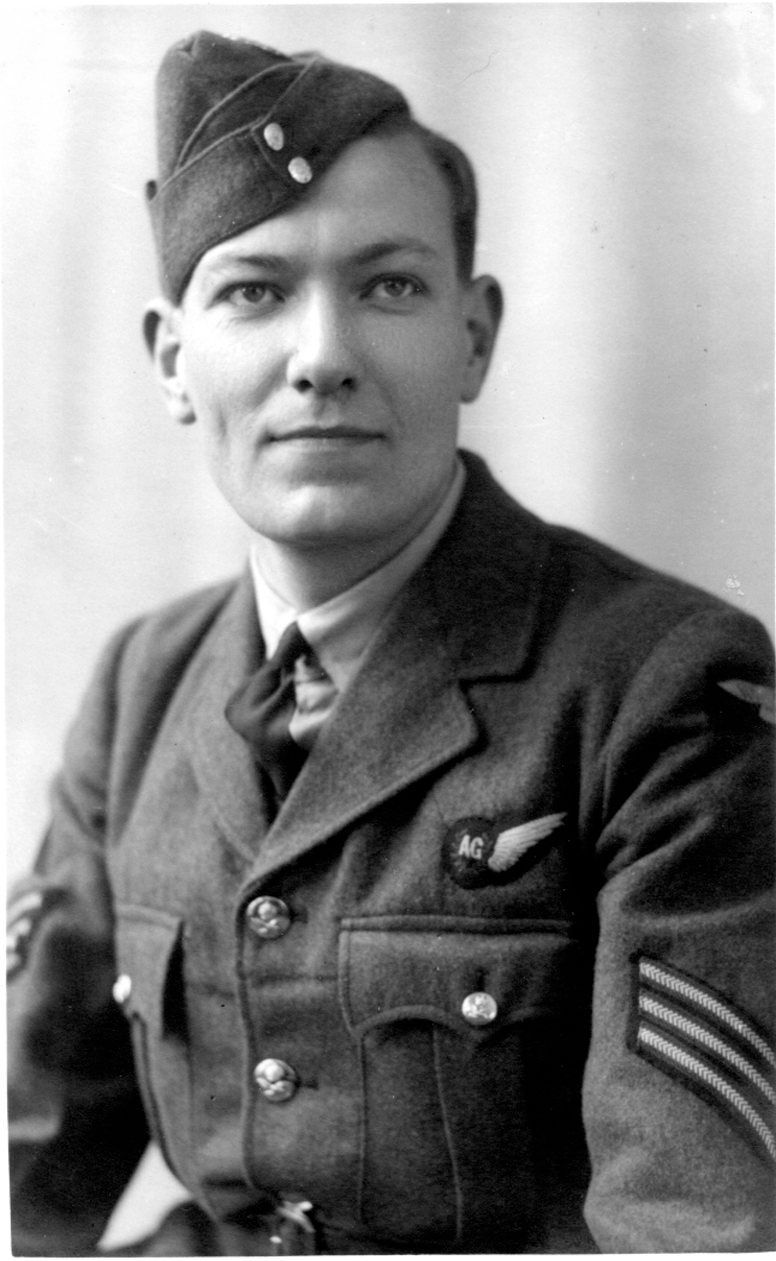
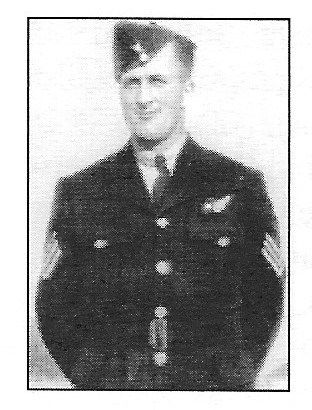
The crew consisted of seven men:
- Sergeant William Price Davies, pilot, Royal Air Force, age 24
- Sergeant William John Chambers, flight engineer, Royal Air Force, age unknown
- Sergeant Christopher Arthur Richardson, navigator, Royal Air Force, age 21
- Flight Sergeant James Cumming MacPhedran, bomb aimer, Royal Air Force, age 27
- Sergeant Stanley Busby, air gunner and wireless operator, Royal Air Force, age 26
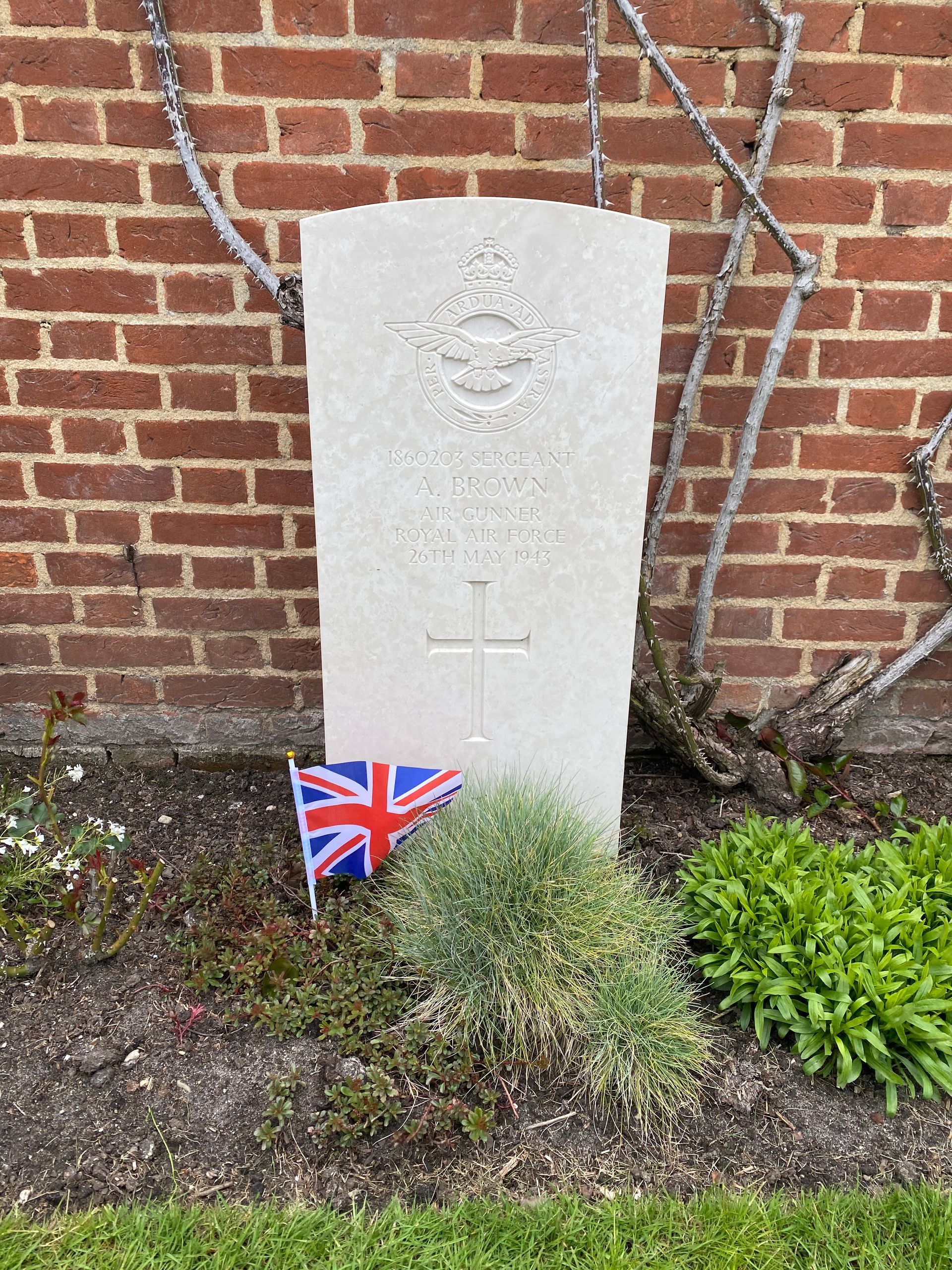
- Sergeant Alfred Brown, mid upper gunner, Royal Air Force, age 19
- Flight Sergeant Arthur Cephas Worden, rear gunner, Royal Canadian Air Force, age 32
Back to the drawing board!
Where do you start to find out more about what happened to this unfortunate crew of seven young lads who gave their lives for our freedom? I started to write e-mails to various organisations in the United Kingdom, but in most cases no reply and if I did get a reply they told me what I already knew. I started following various Facebook groups regarding Bomber Command and also signed up with a Dutch group which studies the air war over the Netherlands, but no new information.
In the meantime, I also came across a website of 51 Squadron RAF where a guestbook was kept for relatives of men who were part of No. 51 Squadron. Here I came in contact with the relatives of a couple of the men who were the crew of HR853.
While overthinking everything I remembered that the Regional Archives in Nijmegen (RAN) also keeps documents and photos of local municipalities. I started to search in their database and to my big surprise there turned out to be a document written by a local Air Protection Service in Malden on the 26th of May 1943! The document itself wasn't online, so I made an appointment to visit the RAN in Nijmegen. A light at the end of the tunnel!
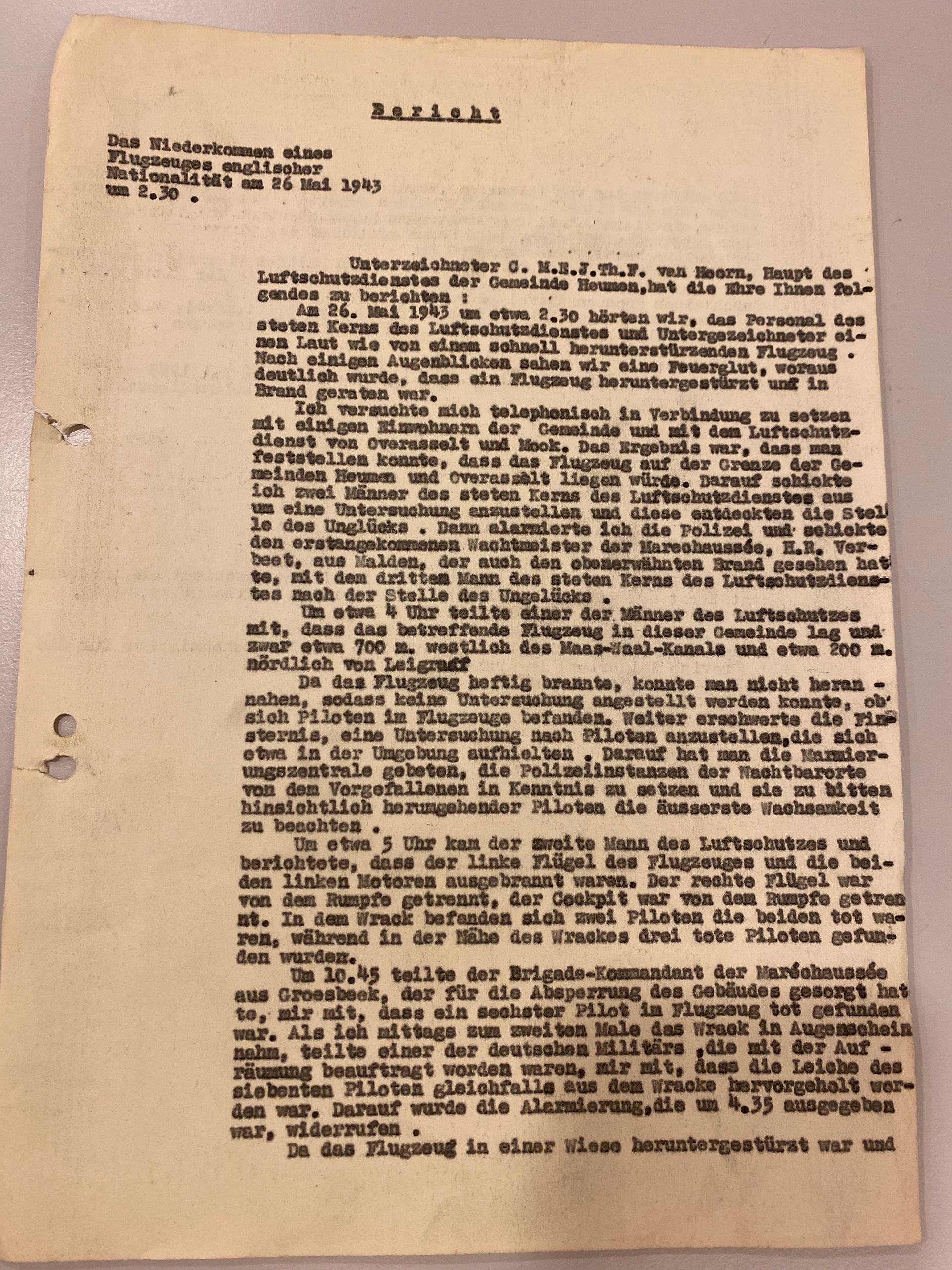
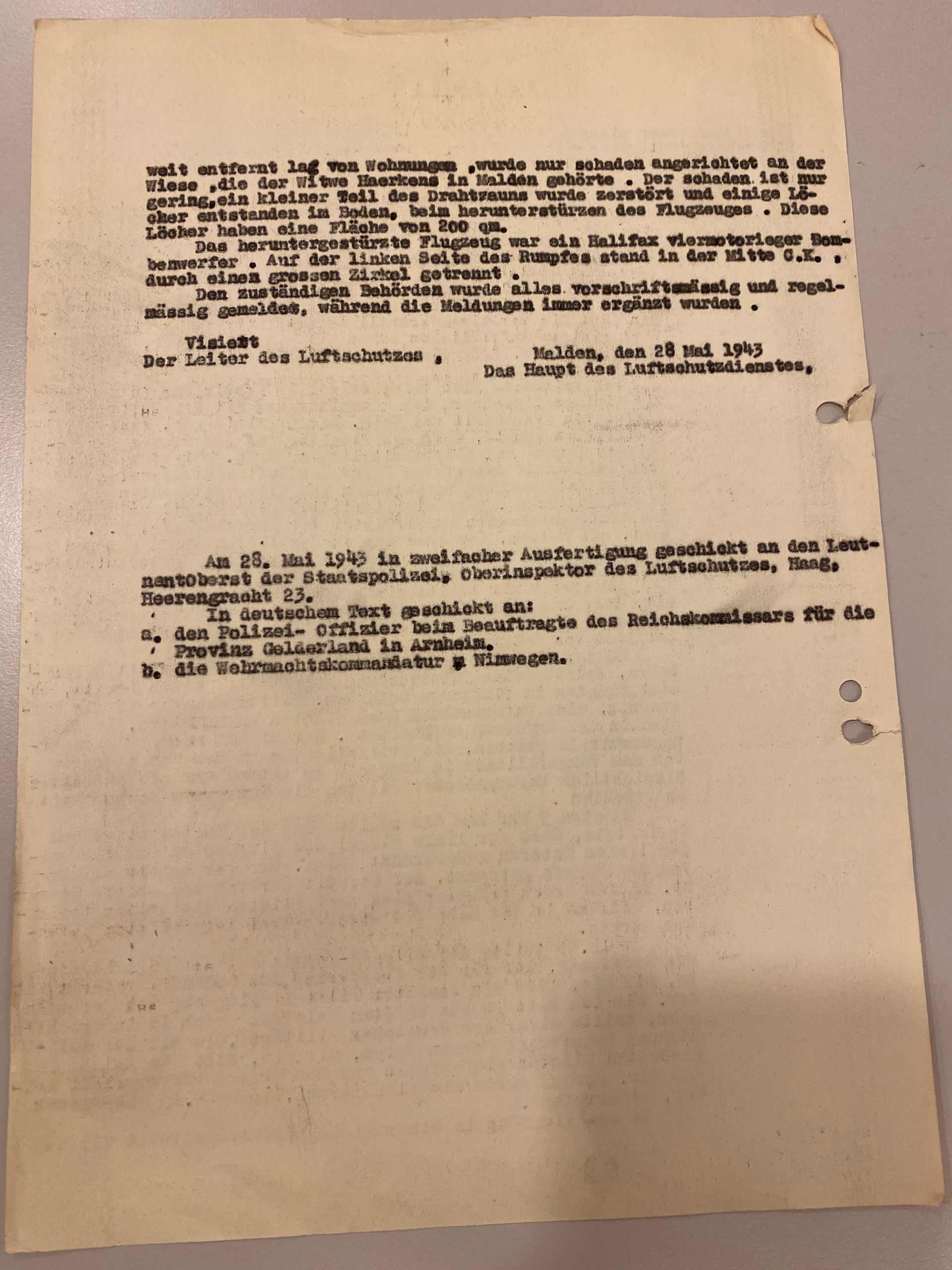
The Air Protection Service report
The Air Protection Service report in the RAN in Nijmegen gave a detailed explanation where HR853 had crashed and what happened to its crew. Because it is completely written in German below the translation in English:
========================================================================================================================
MESSAGE
The crash from an airplane with the
English nationality on May 26, 1943
at 2.30.
Signed C.M.E.J.Th.F. van Hoorn, head of the air raid service from the municipality of Heumen, has the honor to report you the following:
On May 26, 1943 around 2.30 hrs we, the constant core staff of the air raid service and undersigned, heard a sound of a fast falling airplane. After some moments we saw a fire glow from where we concluded that an airplane had crashed and had caught fire.
I tried to get in contact by telephone with some residents of the municipality and also with the air raid service in the municipalities of Overasselt and Mook. The result was that we could conclude that the airplane crashed on the border of the municipalities of Heumen and Overasselt.
I sent two men from the constant core of the air raid service to the scene to investigate the crash site. I then alarmed the Police and sent the first on the scene coming Constable of the Marechaussee (Dutch Military Police), H.R. Verbeet from Malden who also saw the fire as mentioned above, together with a third member of the constant core of the air raid service to the crash site.
Around 4 o’clock one of the men of the air raid service reported that the airplane was lying in this municipality and to be exact about 700 meters West from the Maas-Waalcanal and about 200 meters North of the Leigraaf.
Because the airplane was burning heavily we couldn’t approach the plane to investigate if there were still pilots inside. The darkness made it even harder to investigate if there were any pilots in the area. We then informed the alarm center and asked them to inform local Police of surrounding places to carefully watch out for pilots.
Around 5 o’clock the second man of the air raid service reported that the left wing and the two left engines were burnt out. The right wing was ripped off the hull and also the cockpit was ripped off the hull. Inside the wreck were two pilots who were both dead while near the wreck three dead pilots were found.
Around 10.45 hrs the Brigade-Commander of the Marechaussee in Groesbeek, who guarded the airplane, announced to me that a sixth man was found dead inside the wreck. In the afternoon I went to the wreck for the second time and a German soldier, assigned with clearing up the wreck, reported to me that a seventh body was found dead inside. I then withdrew the alarm which I called up at 4.35 hrs.
The plane crashed in a meadow far away from houses and only caused damage to the meadow belonging to the widow Haerkens in Malden. There is only slight damage to some barbed wire fence and there were holes in the ground from the crashing airplane. These holes are in an area of 200 meters.
The crashed airplane was a four engine Halifax bomber. On the left side of the fuselage was written C.K. in the middle, separated by a large circle.
Everything was regularly and properly reported to the responsible authorities, while the reports were always supplemented.
Vised
The head of the air raid service,
Malden, 28 May 1943
The head of the air raid service,
On 28 May 1943 duplicated were sent to the Lieutenant Colonel, Chief Inspector of the Air Raid Service, The Hague, Heerengracht 23.
In German written text also sent to:
a. The Police Officer at the representative of the Reichs Commissioner for the Province of Gelderland in Arnhem.
b. The Wehrmachtscommand in Nijmegen.
========================================================================================================================
Finally something very useful for my ongoing investigation on the Halifax!

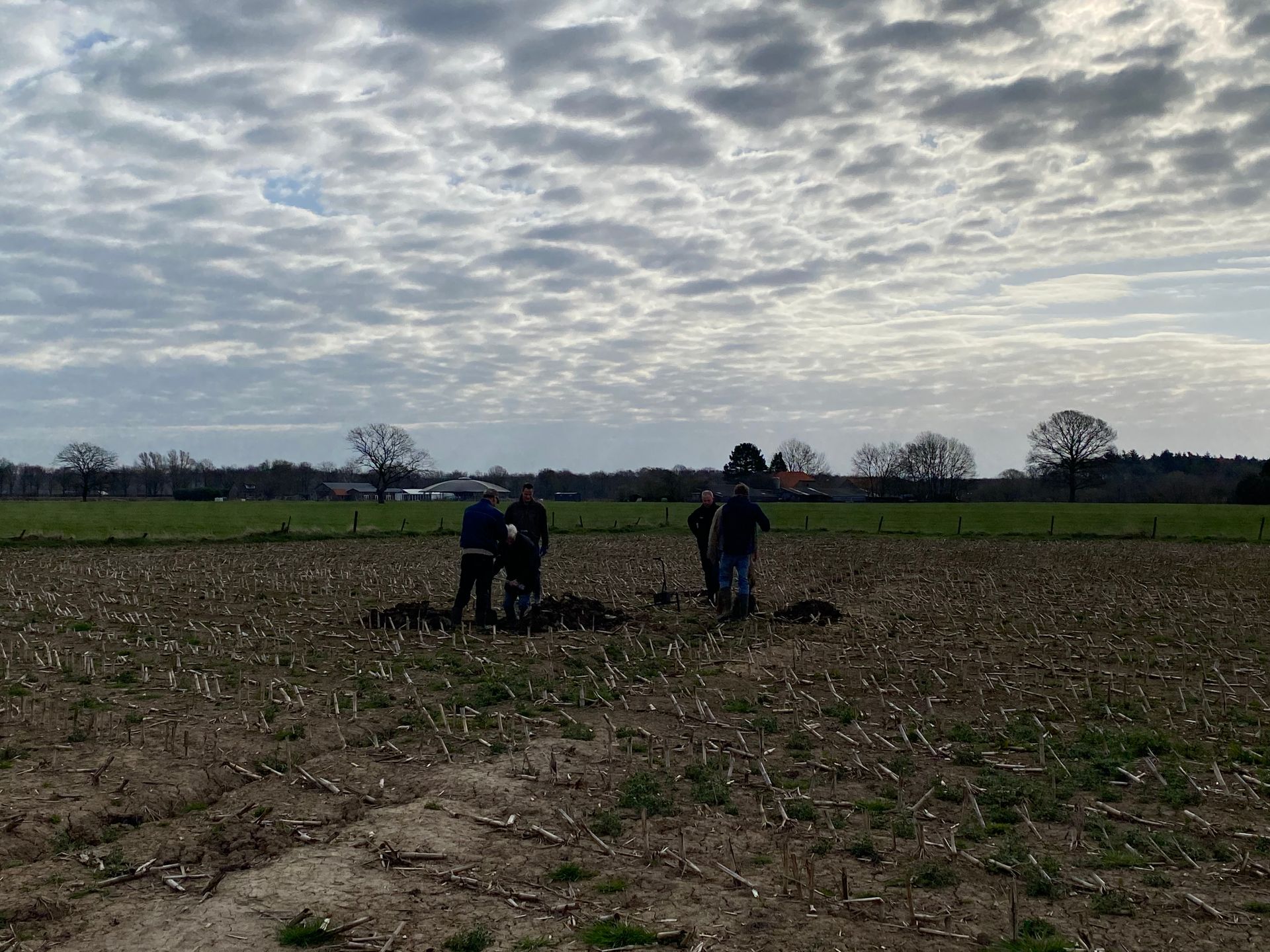
Research in the field
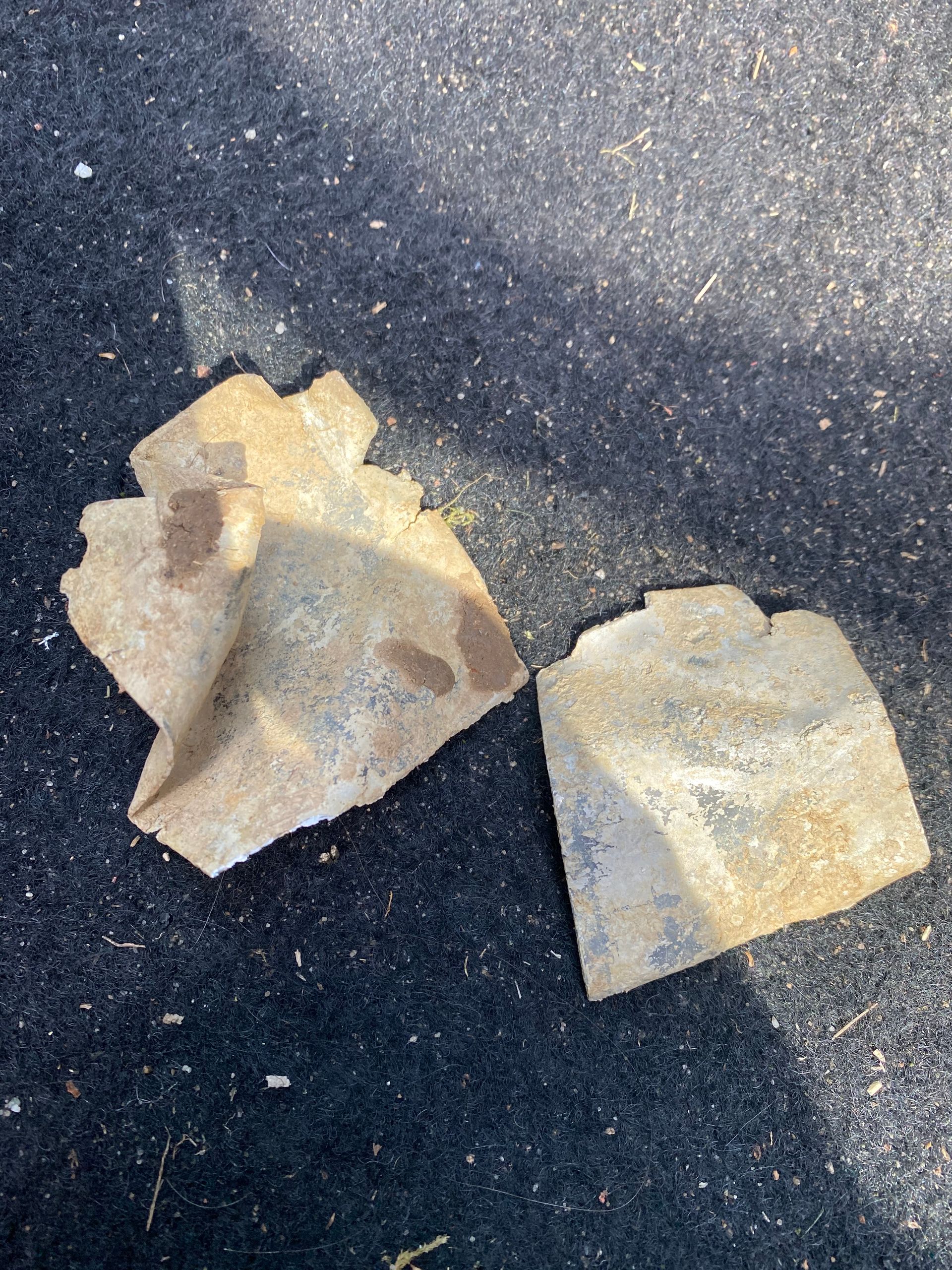
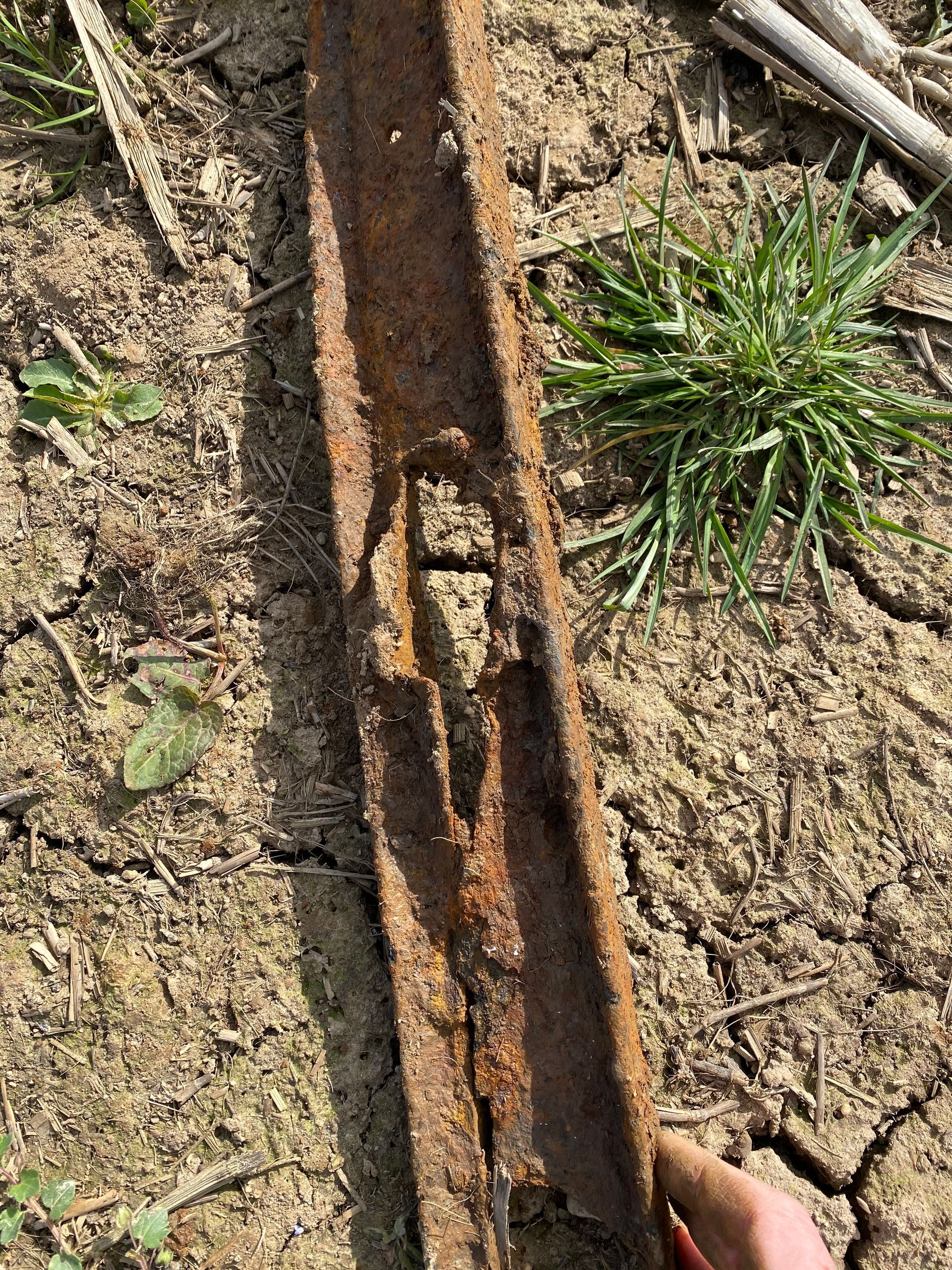
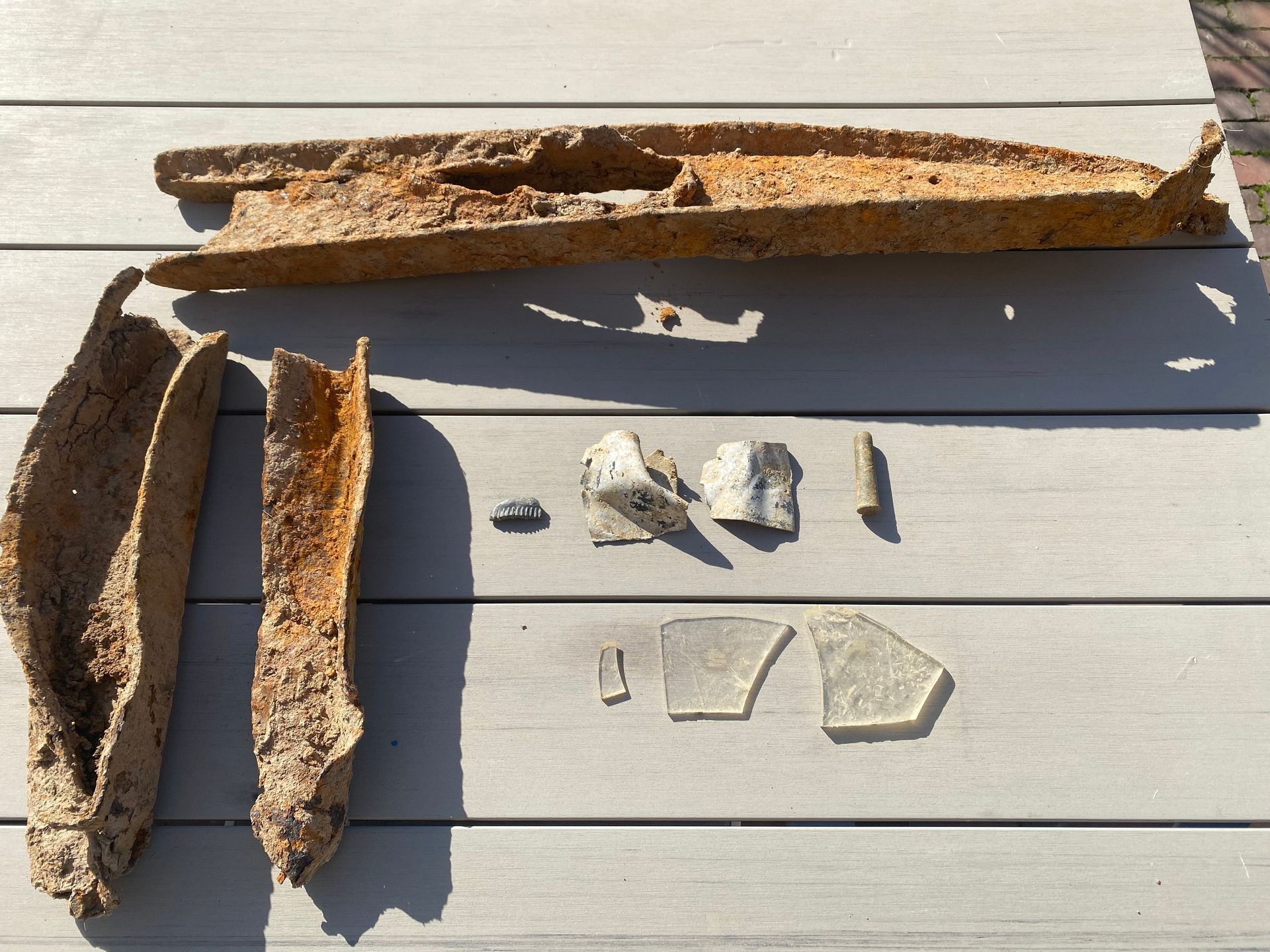
In November 2020 I wanted to do field research at the crash site. With the permission of the landowner we searched with a group of metal detectors for possible remnants of the aircraft with the aim of confirming that it had indeed crashed there. The aircraft wreckage itself was removed and scrapped in May 1943.
The plot of land was first searched visually and later with metal detectors and a ground penetrating radar. Various remnants of cockpit glass, several iron beams belonging to a bomber, pieces of aircraft aluminum, as well as a .303 shell were found. The .303 shell dates from 1943 and is the ammunition for the standard onboard weapon of a Halifax bomber. Of course this was gold to be getting the confirmation that a .303 round was found there at the crashsite!
Contact with the families
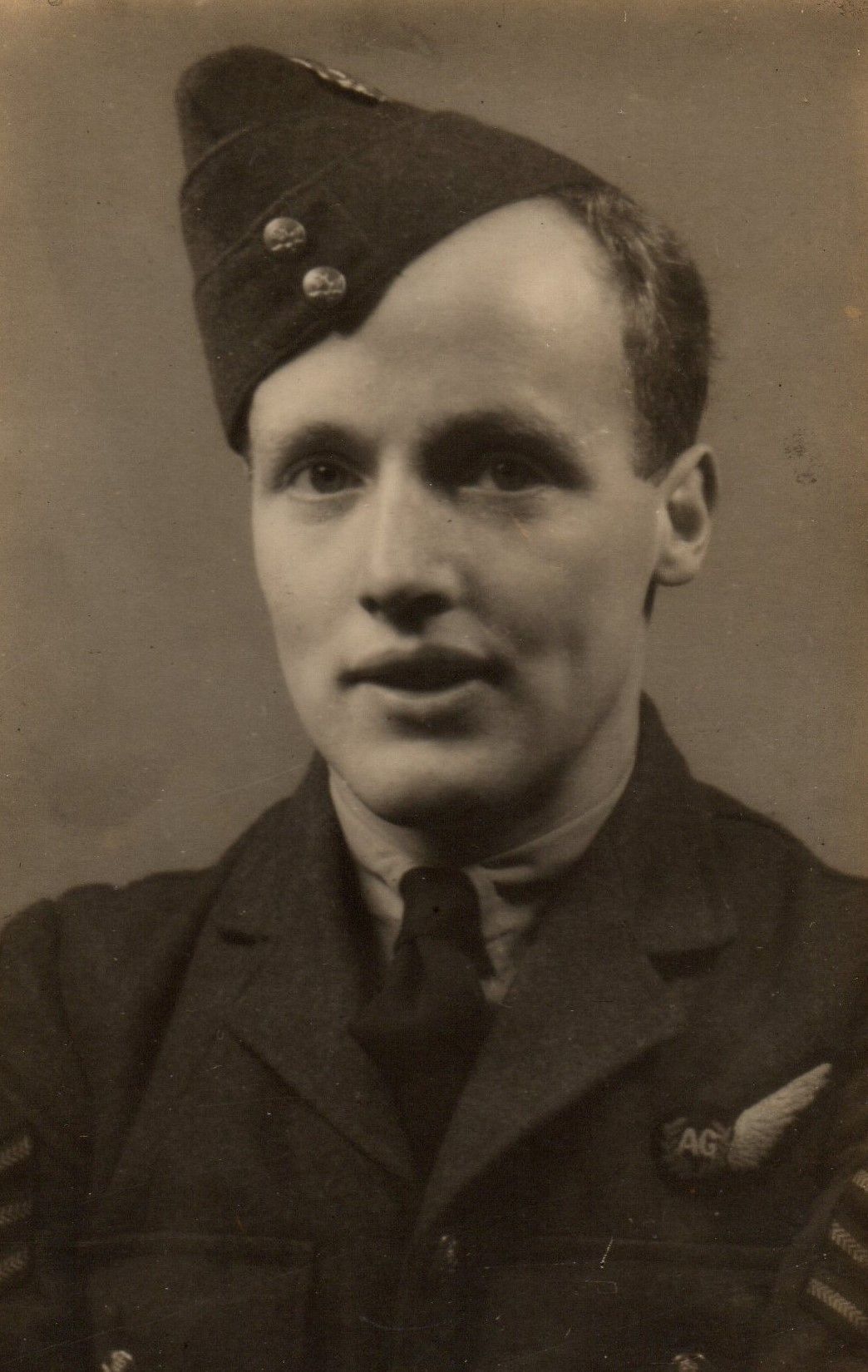
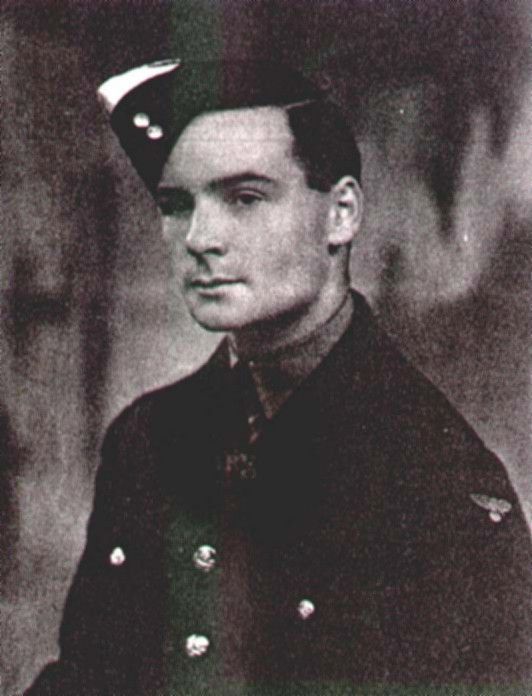
As mentioned earlier through the 51 Squadron website I came in contact with relatives of some of the crewmembers. They provided me with information from earlier researches they did as family members. Some useful information was among this and we kept in contact to share information. Also what we wanted to find was photos from all seven crewmembers also for our project Faces of Uden which we started with the D-Day Dodgers Foundation and local Uden organisations. One photo which we couldn't find and still don't have today is that of the youngest chap on board, Sergeant Alfred Brown. Luckily thanks to our Tracey van Oeffelen we managed to get in contact with his relatives who were very happy that their uncle "Alf" wasn't forgotten. They are trying to find a photo from Alfred, but still no luck so far.
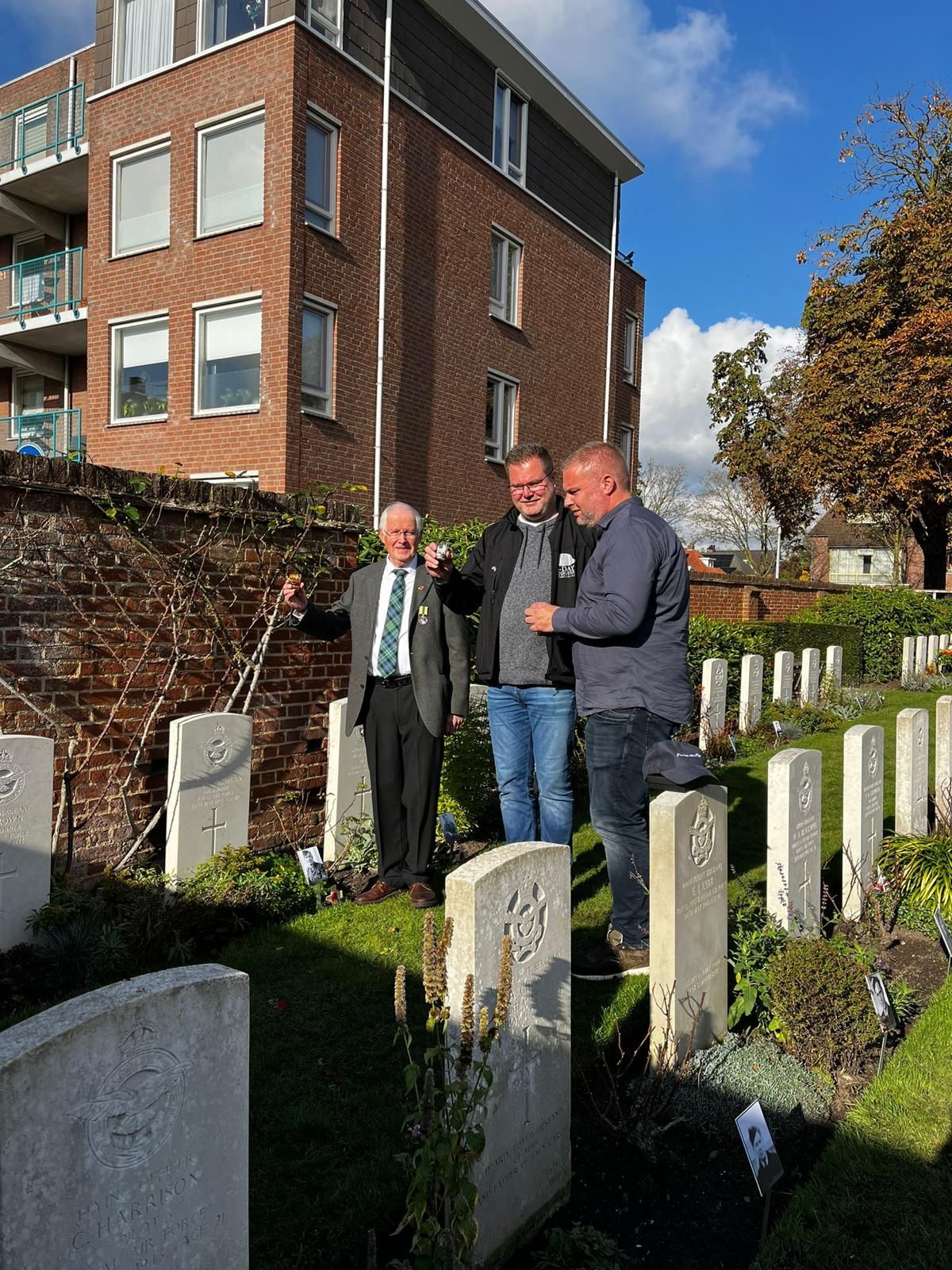
On 27 October 2024 we held the first edition of Faces of Uden where over 400 photos were placed in front of the headstones at Uden War Cemetery. The crew of HR853 wasn't forgotten either, so their photos were placed too.
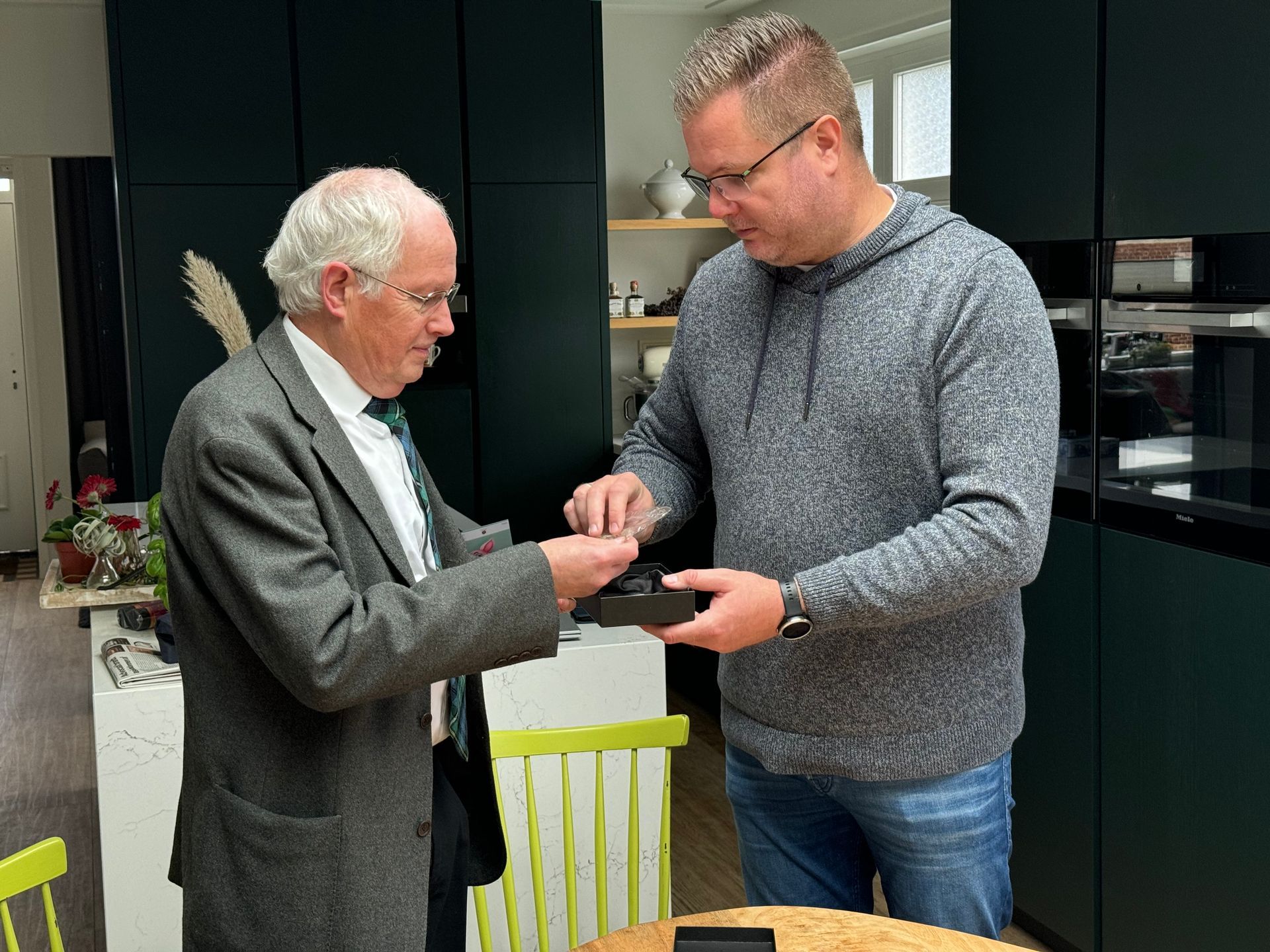
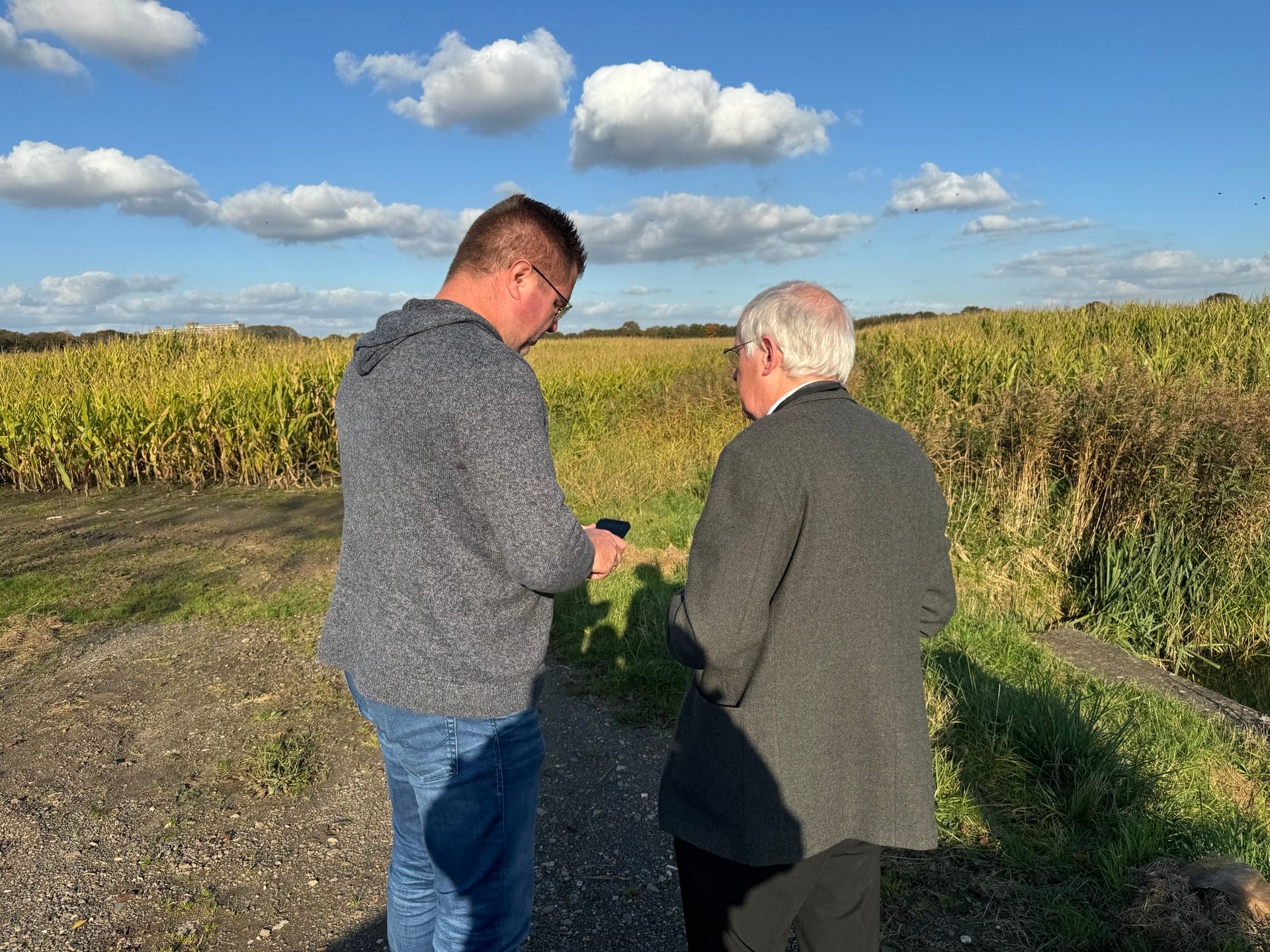
We also had a great honour of welcoming a relative of Flight Sergeant James "Jimmy" Cumming MacPhedran from Scotland. His relative Ken MacTaggart came over to attend Faces of Uden and as D-Day Dodgers Foundation we took him to the field where HR853 crashed and the lads were killed in action. We handed Ken some of the pieces of HR853 including the .303 round as a gift.
The visiting of the crash location was an emotional one although nothing is to see here anymore, but thinking about those seven young lads who lost their lives here far away from home makes you realise how brutal war can be.
Monument
The fact that not a lot was known regarding the crash of Halifax HR853 made it a goal for our Foundation to realise a monument near the crash location. People passing by can stop briefly and remember what these seven boys did for our freedom today. It will be realised in the near future and of course we will keep you updated on this.
Read about our journeys in our blogs
This is our Explore Diary